
Artificial intelligence enhancing business workflow efficiency

How AI-Powered Automation is Redefining Business Operations 2026? 

Businesses today are adopting AI-powered automation in a big way. It is more than just replacing human effort, it is about making workflows smarter, faster and more efficient. With tools like intelligent process automation and AI-driven workflow optimisation, tasks that once took hours are now completed in minutes. As we move through 2026, firms that deploy AI in business operations are seeing major gains in accuracy, speed and decision-making.

Whether it is handling documents, analysing data or serving customers, the rise of AI-powered customer service automation and predictive analytics in business is creating new opportunities. The question now is not if, but how quickly organisations will adapt.

In this blog, we’ll explore how AI in business operations is redefining productivity across industries. You’ll learn how businesses are using automation to optimise workflows, digitise documentation, and enhance AI-powered customer service automation. We’ll also see why these technologies are becoming essential for companies that want to scale faster and make smarter decisions.

How intelligent process automation and AI-driven workflow optimisation deliver value?

When a company introduces intelligent process automation, it uses AI to automate complex, rule-heavy tasks. For example, invoice processing or HR onboarding no longer require manual checks every time. By pairing AI with workflow systems, businesses are shifting from simple automation to dynamic, learning-capable processes. This is what AI-driven workflow optimization means.

The effect is clear: firms are reducing errors, saving time and freeing employees to focus on higher-value work. Moreover, as data volumes grow, leveraging predictive analytics in business becomes essential. With insights in real time, organisations can act before problems escalate. For instance, detecting supply-chain disruptions or proactively reaching out to customers. The net effect: operations become leaner, smarter and more competitive.
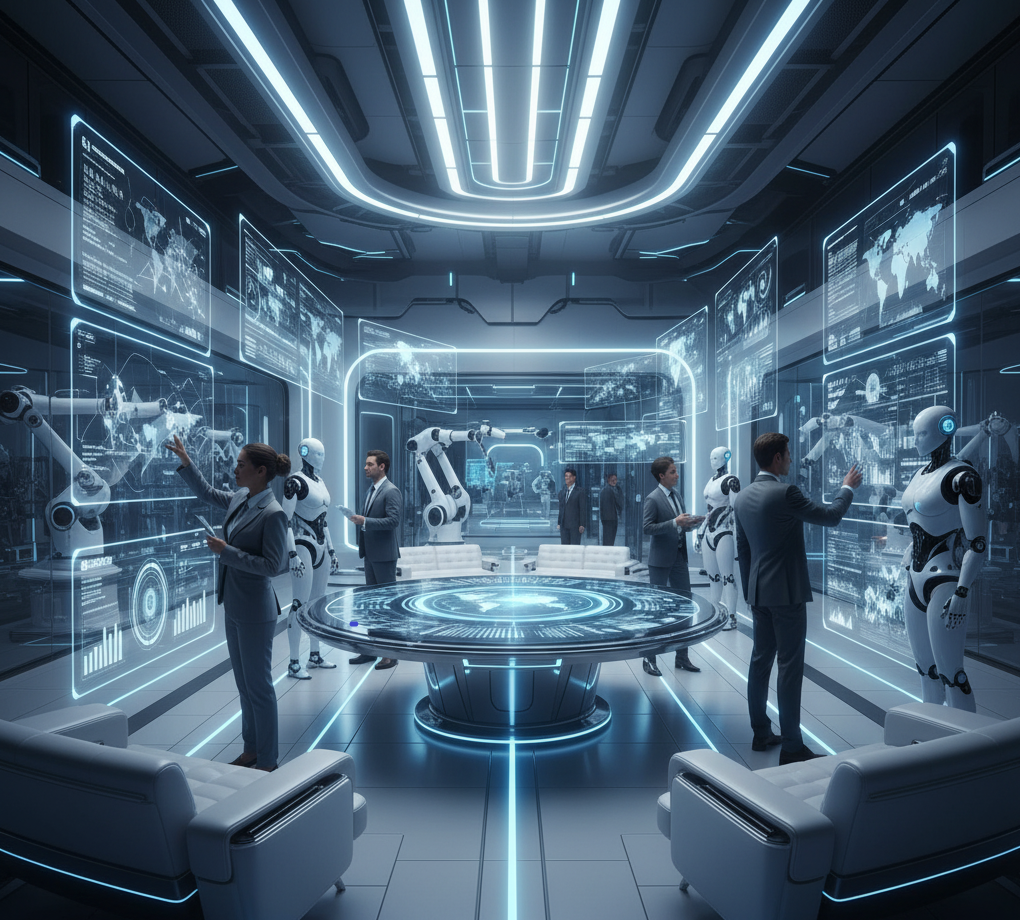
AI-Powered Automation in Business Operations


Benefits of AI-Powered Automation in Business Operations

Businesses across India are witnessing how AI-powered automation is reshaping the way they operate. By combining artificial intelligence with automation, companies can now simplify complex processes, reduce manual work, and make faster decisions. Let’s explore some of the top benefits driving this transformation:

1. Higher productivity and lower operational costs

AI automation removes repetitive, time-consuming work such as data entry, reporting, and customer queries. This allows employees to focus on strategy, innovation, and problem-solving. Studies suggest that automation can lower labour costs by up to 30% while improving output accuracy. In India’s competitive market, this means doing more with smaller teams, without compromising quality.

2. Smarter risk detection and predictive analytics

One of the strongest benefits of AI-driven workflow optimisation is its ability to identify issues before they occur. Using predictive analytics in business, AI monitors data in real time, detects anomalies, and sends alerts for quick action. This proactive approach helps companies, especially in manufacturing, BFSI, and logistics, avoid costly disruptions and improve operational safety.

3. Better visibility across the supply chain

Most organisations still struggle with incomplete supplier data, which leads to compliance and coordination issues. AI-powered automation offers end-to-end visibility by mapping suppliers, analysing global data, and predicting potential risks. Businesses can identify gaps, manage compliance easily, and make supply chains more transparent and efficient.
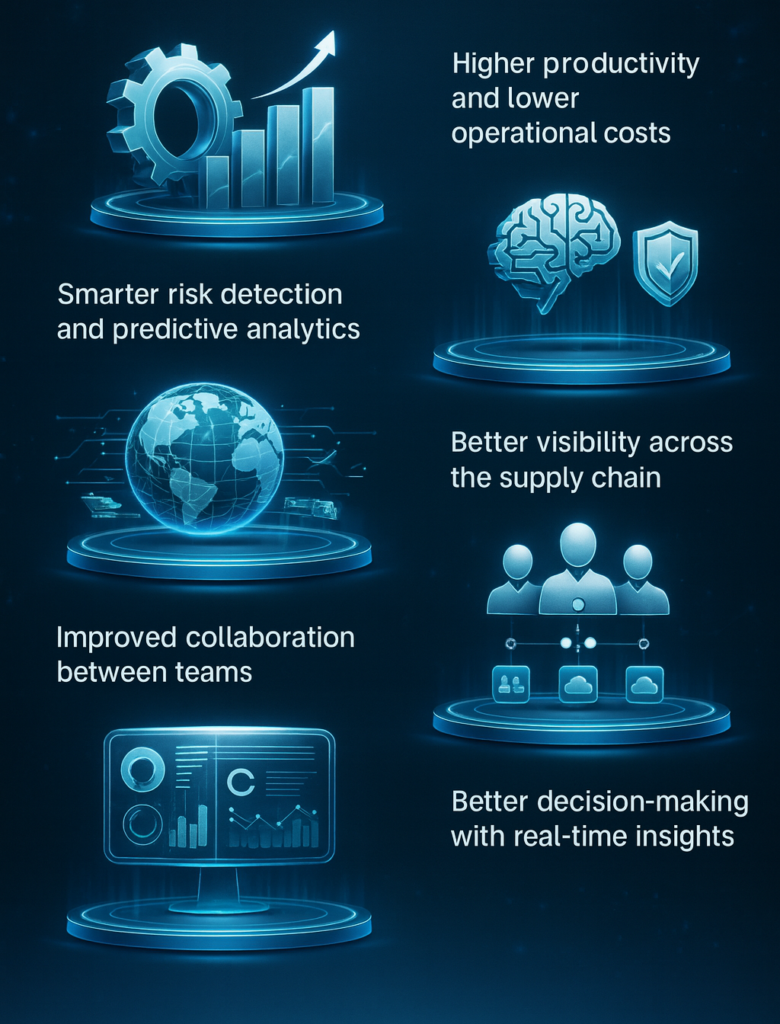
AI automation benefits infographic


4. Improved collaboration between teams

With intelligent process automation, departments can now work together seamlessly. Automated workflows share real-time updates and eliminate paperwork, leading to smoother communication. For example, HR, finance, and operations teams can all view the same process data instantly. This encourages transparency, speeds up decision-making, and builds a culture of collaboration.

5. Faster processes with AI assistants

AI assistants are becoming an integral part of business automation. These intelligent tools provide 24/7 support, guide employees through processes, answer queries, and keep workflows running smoothly. The result is faster turnaround times, reduced delays, and a more consistent user experience.

6. Better decision-making with real-time insights

By analysing huge volumes of data instantly, AI in business operations provides leaders with clear insights. Decision-makers can understand trends, forecast outcomes, and respond quickly to market changes. This level of agility helps businesses stay competitive and make informed strategic choices.

7. Scalable and adaptable growth

As a company expands, AI automation grows with it. It can handle higher workloads without large increases in staff or cost. This scalability makes it ideal for fast-growing enterprises and startups. With automation tools adapting to changing needs, businesses stay flexible and ready for the future.

Workplace Transformation & the Rise of Human-AI Collaboration

In the era of AI-powered automation, the workplace is evolving fast. According to the World Economic Forum’s Future of Jobs Report 2026, global firms expect to add roughly 78 million new jobs by 2030, even as automation removes roughly 92 million roles. 

What does this mean in practical terms?

  • Routine tasks, data-entry, scheduling, compliance checks, are increasingly handled by automation. With AI taking over the mundane, employees can shift focus to creative, strategic, and human-centric work.
  • Job roles are shifting. Businesses now value tech-savvy, agile, and strategic employees more. Skills like AI literacy, digital fluency and critical thinking are climbing in importance.
  • Most importantly, the future is not “humans versus machines”. Instead, it’s about human-AI collaboration. AI handles repetitive tasks, while humans handle empathy, judgement and innovation. Together they deliver far more than either could alone.

    For organisations, this shift means investing not just in tools but in people, training, mindset change and new roles to partner with automation.

How AI-Driven Automation is Reshaping Core Business Functions?

The impact of AI-powered automation reaches across business functions, from customer service to supply chains and HR. Let’s take a closer look:

Customer Service Automation

AI‐based chatbots and virtual assistants manage queries 24/7, deliver personalized responses and free up human agents for complex issues. This is a prime example of AI in business operations improving service quality and speed.

Supply Chain & Logistics

Using predictive analytics in business, firms can forecast demand, optimize inventory and track shipments in real time. This level of insight is powered by AI-driven workflow optimisation.

Finance & Compliance

AI automates tasks like invoice processing, fraud detection and regulatory checks. This means fewer errors, faster turnaround and stronger adherence to rules, key in the Indian regulatory environment.

Digitizing Documentation & Customer Service

AI-powered automation is transforming paperwork and customer interactions. Tools like OCR digitise documents, speed up approvals, and reduce errors. Meanwhile, AI chatbots handle routine queries, improving response times and customer satisfaction. Together, they drive a data-first culture where decisions are faster, smarter, and more accurate.

HR & Talent Management

Digitised onboarding, AI-based candidate screening, continuous learning engines, all powered by intelligent process automation. HR becomes less about paperwork and more about people strategy.

By adopting AI into these functions, companies don’t just automate but they become smarter, faster and more responsive. For businesses facing growing competition and complex markets, this becomes a major advantage.

Conclusion: Embracing AI Automation for a Smarter Future

AI automation is no longer a distant idea, it’s the present reality shaping how modern businesses operate. Companies across India and the world are witnessing how AI-powered automation brings real value by improving efficiency, accuracy, and scalability. From simplifying workflows and enhancing customer support to streamlining financial operations and predicting market changes, AI is becoming the backbone of smart business transformation.

The real strength of AI business automation lies in how it blends technology with human intelligence. It doesn’t replace people, it empowers them to focus on creative, analytical, and strategic work. As repetitive tasks get automated, employees can contribute more meaningfully to innovation and business growth.

While the journey to automation requires investment and planning, the long-term rewards are far greater, cost savings, faster decision-making, and a strong competitive edge. Businesses that act now and integrate AI-driven automation into their core processes will not just keep up with change, they’ll lead it.

AI automation is the future of intelligent business, helping organizations stay agile, data-driven, and ready for the opportunities of tomorrow.

Frequently Asked Questions

Q1. How does AI-powered automation support decision-making in businesses?

AI-powered automation goes beyond completing tasks, it provides real-time insights by analysing large volumes of data. With predictive analytics in business, companies can forecast trends, detect risks early, and make smarter, faster decisions. This empowers leaders to act proactively rather than reactively, improving overall business agility.

Q2. Can AI automation enhance customer engagement?

Yes. AI-driven systems personalise interactions through chatbots, recommendation engines, and automated support across channels. Businesses using AI-powered customer service automation can handle thousands of queries simultaneously, provide instant responses, and tailor services to individual preferences, leading to higher customer satisfaction and loyalty.

Q3. What role does AI play in regulatory compliance and risk management?

AI-powered automation improves compliance by continuously monitoring operations against rules and regulations. Intelligent systems flag anomalies, ensure accurate reporting, and reduce human errors. In highly regulated industries like finance, healthcare, and logistics, this reduces fines, streamlines audits, and improves operational trust.

Q4. How can mid-sized and small Indian businesses implement AI automation effectively?

Small and mid-sized businesses can start by identifying repetitive, time-consuming tasks such as invoice processing, customer queries, or reporting. Leveraging affordable AI tools and cloud-based automation platforms, they can gradually integrate intelligent process automation without heavy upfront costs. Partnering with expert providers ensures smooth implementation and measurable ROI.

Q5. What emerging trends in 2026 should Indian businesses watch in AI automation?

Key trends include hyper-automation, generative AI for process optimisation, and AI-powered workflow intelligence. Businesses are also exploring AI-driven workflow optimisation to integrate predictive insights directly into operations. These trends help companies become more adaptable, reduce operational risks, and innovate faster in competitive Indian markets.

Artificial intelligence enhancing business workflow efficiency

How AI-Powered Automation is Redefining Business Operations 2025? 

Businesses today are adopting AI-powered automation in a big way. It is more than just replacing human effort, it is about making workflows smarter, faster and more efficient. With tools like intelligent process automation and AI-driven workflow optimization, tasks that once took hours are now completed in minutes. As we move through 2025, firms that deploy AI in business operations are seeing major gains in accuracy, speed and decision-making.

Whether it is handling documents, analysing data or serving customers, the rise of AI-powered customer service automation and predictive analytics in business is creating new opportunities. The question now is not if, but how quickly organisations will adapt.

In this blog, we’ll explore how AI in business operations is redefining productivity across industries. You’ll learn how businesses are using automation to optimise workflows, digitise documentation, and enhance AI-powered customer service automation. We’ll also see why these technologies are becoming essential for companies that want to scale faster and make smarter decisions.

How intelligent process automation and AI-driven workflow optimisation deliver value?

When a company introduces intelligent process automation, it uses AI to automate complex, rule-heavy tasks. For example, invoice processing or HR onboarding no longer require manual checks every time. By pairing AI with workflow systems, businesses are shifting from simple automation to dynamic, learning-capable processes. This is what AI-driven workflow optimization means.

The effect is clear: firms are reducing errors, saving time and freeing employees to focus on higher-value work. Moreover, as data volumes grow, leveraging predictive analytics in business becomes essential. With insights in real time, organisations can act before problems escalate. For instance, detecting supply-chain disruptions or proactively reaching out to customers. The net effect: operations become leaner, smarter and more competitive.

AI-Powered Automation in Business Operations


Benefits of AI-Powered Automation in Business Operations

Businesses across India are witnessing how AI-powered automation is reshaping the way they operate. By combining artificial intelligence with automation, companies can now simplify complex processes, reduce manual work, and make faster decisions. Let’s explore some of the top benefits driving this transformation:

1. Higher productivity and lower operational costs

AI automation removes repetitive, time-consuming work such as data entry, reporting, and customer queries. This allows employees to focus on strategy, innovation, and problem-solving. Studies suggest that automation can lower labour costs by up to 30% while improving output accuracy. In India’s competitive market, this means doing more with smaller teams, without compromising quality.

2. Smarter risk detection and predictive analytics

One of the strongest benefits of AI-driven workflow optimisation is its ability to identify issues before they occur. Using predictive analytics in business, AI monitors data in real time, detects anomalies, and sends alerts for quick action. This proactive approach helps companies, especially in manufacturing, BFSI, and logistics, avoid costly disruptions and improve operational safety.

3. Better visibility across the supply chain

Most organisations still struggle with incomplete supplier data, which leads to compliance and coordination issues. AI-powered automation offers end-to-end visibility by mapping suppliers, analysing global data, and predicting potential risks. Businesses can identify gaps, manage compliance easily, and make supply chains more transparent and efficient.

AI automation benefits infographic


4. Improved collaboration between teams

With intelligent process automation, departments can now work together seamlessly. Automated workflows share real-time updates and eliminate paperwork, leading to smoother communication. For example, HR, finance, and operations teams can all view the same process data instantly. This encourages transparency, speeds up decision-making, and builds a culture of collaboration.

5. Faster processes with AI assistants

AI assistants are becoming an integral part of business automation. These intelligent tools provide 24/7 support, guide employees through processes, answer queries, and keep workflows running smoothly. The result is faster turnaround times, reduced delays, and a more consistent user experience.

6. Better decision-making with real-time insights

By analysing huge volumes of data instantly, AI in business operations provides leaders with clear insights. Decision-makers can understand trends, forecast outcomes, and respond quickly to market changes. This level of agility helps businesses stay competitive and make informed strategic choices.

7. Scalable and adaptable growth

As a company expands, AI automation grows with it. It can handle higher workloads without large increases in staff or cost. This scalability makes it ideal for fast-growing enterprises and startups. With automation tools adapting to changing needs, businesses stay flexible and ready for the future.

Workplace Transformation & the Rise of Human-AI Collaboration

In the era of AI-powered automation, the workplace is evolving fast. According to the World Economic Forum’s Future of Jobs Report 2025, global firms expect to add roughly 78 million new jobs by 2030, even as automation removes roughly 92 million roles. 

What does this mean in practical terms?

  • Routine tasks, data-entry, scheduling, compliance checks, are increasingly handled by automation. With AI taking over the mundane, employees can shift focus to creative, strategic, and human-centric work.
  • Job roles are shifting. Businesses now value tech-savvy, agile, and strategic employees more. Skills like AI literacy, digital fluency and critical thinking are climbing in importance.
  • Most importantly, the future is not “humans versus machines”. Instead, it’s about human-AI collaboration. AI handles repetitive tasks, while humans handle empathy, judgement and innovation. Together they deliver far more than either could alone.

For organisations, this shift means investing not just in tools but in people, training, mindset change and new roles to partner with automation.

How AI-Driven Automation is Reshaping Core Business Functions?

The impact of AI-powered automation reaches across business functions, from customer service to supply chains and HR. Let’s take a closer look:

Customer Service Automation

AI‐based chatbots and virtual assistants manage queries 24/7, deliver personalized responses and free up human agents for complex issues. This is a prime example of AI in business operations improving service quality and speed.

Supply Chain & Logistics

Using predictive analytics in business, firms can forecast demand, optimize inventory and track shipments in real time. This level of insight is powered by AI-driven workflow optimisation.

Finance & Compliance

AI automates tasks like invoice processing, fraud detection and regulatory checks. This means fewer errors, faster turnaround and stronger adherence to rules, key in the Indian regulatory environment.

Digitizing Documentation & Customer Service

AI-powered automation is transforming paperwork and customer interactions. Tools like OCR digitise documents, speed up approvals, and reduce errors. Meanwhile, AI chatbots handle routine queries, improving response times and customer satisfaction. Together, they drive a data-first culture where decisions are faster, smarter, and more accurate.

HR & Talent Management

Digitised onboarding, AI-based candidate screening, continuous learning engines, all powered by intelligent process automation. HR becomes less about paperwork and more about people strategy.

By adopting AI into these functions, companies don’t just automate but they become smarter, faster and more responsive. For businesses facing growing competition and complex markets, this becomes a major advantage.

Conclusion: Embracing AI Automation for a Smarter Future

AI automation is no longer a distant idea, it’s the present reality shaping how modern businesses operate. Companies across India and the world are witnessing how AI-powered automation brings real value by improving efficiency, accuracy, and scalability. From simplifying workflows and enhancing customer support to streamlining financial operations and predicting market changes, AI is becoming the backbone of smart business transformation.

The real strength of AI business automation lies in how it blends technology with human intelligence. It doesn’t replace people, it empowers them to focus on creative, analytical, and strategic work. As repetitive tasks get automated, employees can contribute more meaningfully to innovation and business growth.

While the journey to automation requires investment and planning, the long-term rewards are far greater, cost savings, faster decision-making, and a strong competitive edge. Businesses that act now and integrate AI-driven automation into their core processes will not just keep up with change, they’ll lead it.

AI automation is the future of intelligent business, helping organizations stay agile, data-driven, and ready for the opportunities of tomorrow.

Frequently Asked Questions

Q1. How does AI-powered automation support decision-making in businesses?

AI-powered automation goes beyond completing tasks, it provides real-time insights by analysing large volumes of data. With predictive analytics in business, companies can forecast trends, detect risks early, and make smarter, faster decisions. This empowers leaders to act proactively rather than reactively, improving overall business agility.

Q2. Can AI automation enhance customer engagement?

Yes. AI-driven systems personalise interactions through chatbots, recommendation engines, and automated support across channels. Businesses using AI-powered customer service automation can handle thousands of queries simultaneously, provide instant responses, and tailor services to individual preferences, leading to higher customer satisfaction and loyalty.

Q3. What role does AI play in regulatory compliance and risk management?

AI-powered automation improves compliance by continuously monitoring operations against rules and regulations. Intelligent systems flag anomalies, ensure accurate reporting, and reduce human errors. In highly regulated industries like finance, healthcare, and logistics, this reduces fines, streamlines audits, and improves operational trust.

Q4. How can mid-sized and small Indian businesses implement AI automation effectively?

Small and mid-sized businesses can start by identifying repetitive, time-consuming tasks such as invoice processing, customer queries, or reporting. Leveraging affordable AI tools and cloud-based automation platforms, they can gradually integrate intelligent process automation without heavy upfront costs. Partnering with expert providers ensures smooth implementation and measurable ROI.

Q5. What emerging trends in 2025 should Indian businesses watch in AI automation?

Key trends include hyper-automation, generative AI for process optimisation, and AI-powered workflow intelligence. Businesses are also exploring AI-driven workflow optimisation to integrate predictive insights directly into operations. These trends help companies become more adaptable, reduce operational risks, and innovate faster in competitive Indian markets.

Leave a Reply

Your email address will not be published. Required fields are marked *

CommentLuv badge