Magento Ecommerce Development Services: Create eCommerce Sites
Magento E-Commerce development services mean building and tailoring online stores on the Magento platform. Businesses pick Magento for scale, multi-channel selling, SEO readiness, and robust security. A strong Magento setup helps stores handle traffic spikes and complex catalog needs.
A wide community of developers creates themes and extensions. These tools speed up development and add real features. That makes it easy to craft a distinct and useful e-commerce experience.
Thousands of online businesses trust Magento to power their stores. From global retail giants like Nike, Puma, and H&M to lifestyle brands such as Coca-Cola and Tommy Hilfiger, the platform has earned a solid reputation. Recent studies also show that a notable share of the world’s busiest e-commerce sites still choose Magento, proving its strength among high-volume retailers.
Magento runs on PHP and comes as Open Source or Adobe Commerce. Both editions give merchants deep control and room to grow. Certified, end-to-end Magento e-commerce services help you manage the store and deliver a better customer experience.
In this article, we explain Magento E-Commerce store development and the steps to launch or scale your shop. You’ll get clear advice on features, partners, and next steps.
What is Magento E-Commerce Development?
Magento E-Commerce development services are the foundation for building a powerful online store that grows with your business. It’s more than just creating a website, it’s about crafting a store that is flexible, scalable, and aligned with your brand goals.
The process covers every step of store creation: designing the architecture, customizing the look and feel, improving the user experience, and integrating secure payment and shipping solutions. With Magento, you can add features that suit your market – whether it’s advanced product filters, multi-store functionality, or seamless mobile experiences.
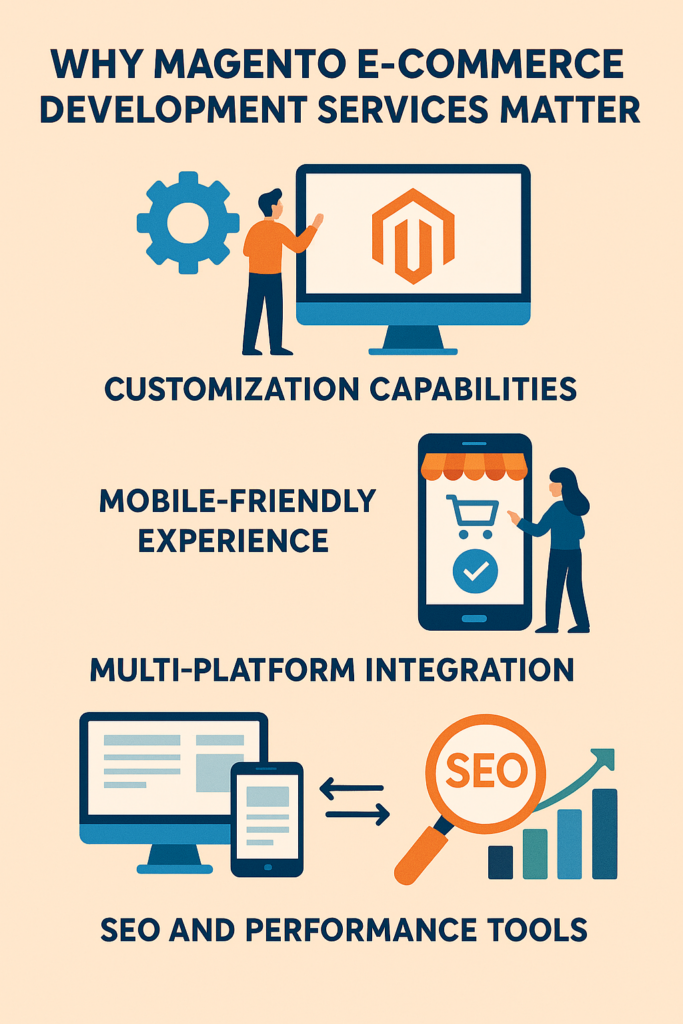
Why Magento E-Commerce Development Services Matter?
Magento is trusted by over 250,000 merchants worldwide for its ability to adapt to different industries and business sizes. Startups and enterprises alike benefit from its strong customization options, wide extension marketplace, and mobile responsiveness.
Customization Capabilities
Tailor the design, workflows, and store functions to match your brand. From custom themes to extensions, Magento gives you full creative control.
Mobile-Friendly Experience
A responsive store that works smoothly across devices helps boost conversions and search rankings.
Multi-Platform Integration
Easily connect your Magento store with payment gateways, shipping partners, POS systems, and CRMs to streamline operations.
SEO and Performance Tools
Magento comes with built-in features that improve search visibility and optimize speed, helping your store load fast and rank higher.
The Role of Professional Magento Development Services
While Magento is powerful, unlocking its full potential often requires expert hands. Certified Magento developers can plan the architecture, configure store settings, install extensions, and fine-tune the store for performance and security. Their support ensures a seamless setup, smooth upgrades, and a shopping experience that delights customers.
In the next section, we’ll explore the Magento E-Commerce development process and walk you through the steps to launch or scale your online store successfully.
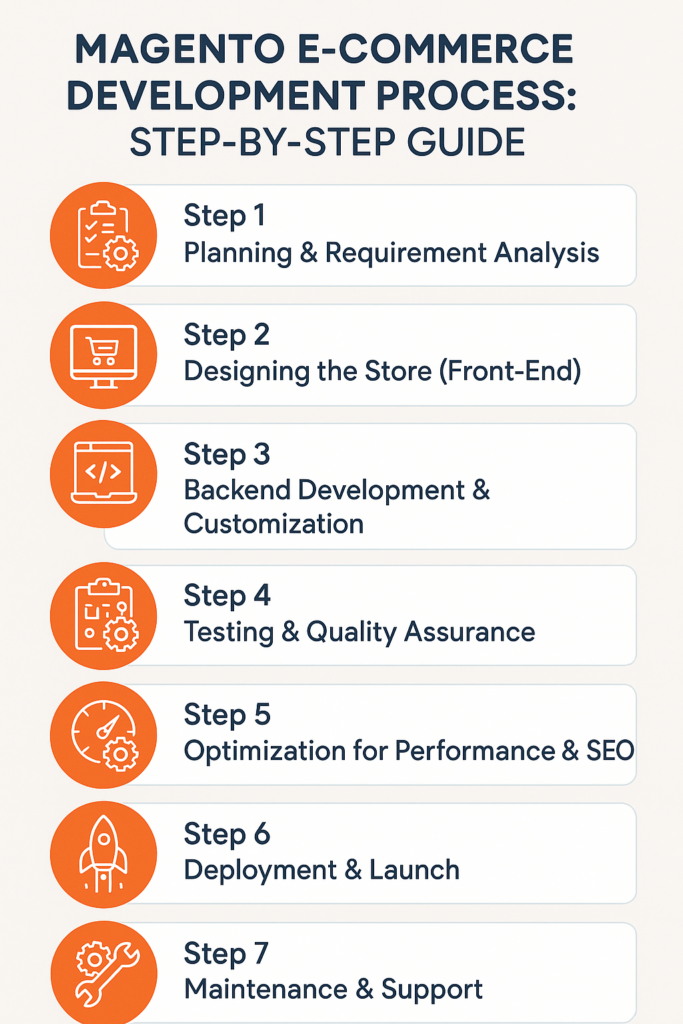
Magento E-Commerce Development Process: Step-by-Step Guide
Magento E-Commerce development services involve much more than simply setting up a store. It is about creating a website that is reliable, scalable, and optimized for your customers. To build such a store, developers follow a well-structured process. Let’s break down the key phases:
Step 1: Planning & Requirement Analysis
Every successful Magento website starts with a clear plan. In this stage, businesses define the store’s purpose, target customers, and growth goals. A detailed requirement analysis helps in shaping the website’s structure, choosing themes, deciding on functions, and shortlisting extensions. Market research also plays a role here — studying competitors and identifying gaps ensures your Magento E-Commerce development aligns with customer needs.
Step 2: Designing the Store (Front-End)
The design phase focuses on creating an engaging and user-friendly store layout. Developers use wireframes to map out navigation, product pages, and call-to-action buttons. You can choose from pre-built Magento themes or opt for custom theme development for a unique look. Mobile responsiveness is essential, ensuring your store works seamlessly on smartphones and tablets.
Step 3: Backend Development & Customization
In this stage, the technical setup begins. Developers configure the Magento environment, install necessary extensions, integrate payment gateways, and connect shipping services. Custom Magento E-Commerce development also allows businesses to personalize workflows, add custom functions, and create CMS pages that reflect their brand identity.
Step 4: Testing & Quality Assurance
Before launch, the site undergoes extensive testing. This includes functionality tests (ensuring every feature works properly), usability tests (checking customer experience), and security checks (protecting against vulnerabilities). Compatibility across browsers and devices is also tested. The goal is to ensure the Magento store is fast, secure, and reliable.
Step 5: Optimization for Performance & SEO
A Magento E-Commerce website is only effective if it performs well. Developers fine-tune speed using caching tools like Varnish, optimize product pages for SEO, and ensure smooth checkout processes. These improvements help in achieving higher search rankings and better customer retention.
Step 6: Deployment & Launch
Once everything is ready, the site goes live. Developers move the code to the production server, connect the store to its domain, and set up promotional campaigns. A strong launch strategy helps attract new visitors right from day one.
Step 7: Maintenance & Support
Post-launch, regular maintenance is necessary. Developers provide ongoing support, update extensions, fix bugs, and ensure the site continues to deliver a smooth shopping experience. Many Magento E-Commerce development services also include security monitoring and feature updates to keep stores competitive.
The Role of Magento 2 Development in Scaling Your Business
Magento is not just about building a store; it’s about creating a platform that grows with your business. Here’s how Magento 2 helps companies scale:
Scalability
Handles thousands of products and high traffic without slowing down.
Customization
Offers flexibility to create tailored shopping experiences.
Multi-Store Support
Run multiple stores with different languages, currencies, and catalogs.
Performance
Built-in tools like Varnish ensure fast loading, even during peak sales.
Mobile Optimization
Fully responsive for today’s mobile-first shoppers.
SEO Features
Strong SEO tools help boost online visibility.
Security
SSL support and two-factor authentication protect customer data.
Integrations
Easy connection with CRMs, ERPs, and payment providers.
Analytics
Built-in reporting helps businesses make smarter decisions.
Essential Components of Magento Website Development
When developing a Magento E-Commerce website, these components are crucial:
Theme Development
Create a visually appealing, responsive design that matches your brand.
Product Management
Manage simple, configurable, and bundled products with ease.
Payment Gateway Integration
Secure payment options like PayPal, Stripe, and Authorize.Net.
Shipping & Tax Setup
Accurate shipping rates and tax rules tailored to customer location.
Performance Optimization
Use caching and optimization techniques for faster load times.
Web Hosting
Reliable Magento hosting ensures stability during traffic spikes.
Admin Panel
A simple dashboard for managing orders, products, and customer data.
Important Considerations in Magento E-commerce Development Services
Building a powerful online store takes more than just good design. When it comes to Magento e-commerce development, success depends on the small yet critical decisions you make during the setup and beyond. From choosing the right hosting to keeping your site updated, every step plays a role in how smoothly your store runs, how secure it is, and how well it serves customers.
Magento is a strong and flexible platform, but to get the best results, you need to pay attention to a few important details. Let’s walk through the key factors that every business should consider when working with a Magento website development company.
Choosing the Right Magento Hosting Provider
The foundation of a great online store is reliable hosting. A Magento hosting provider must offer:
- Fast website speed to keep users engaged and reduce bounce rates.
- Dedicated servers designed for Magento’s requirements, ensuring your store can handle high traffic and complex operations without slowing down.
- 24/7 support, so if issues arise, you get quick help and minimal downtime.
The right hosting ensures your Magento e-commerce website performs smoothly even during busy sales seasons.
Installing the Latest Magento Version
Keeping your store updated is essential for security and performance. Most hosting providers offer one-click Magento installation, making setup simple and quick.
For businesses that need more control, a manual installation is also possible. This process includes downloading Magento’s latest version, uploading it to your server, and customizing settings. While it requires more technical knowledge, it gives you greater flexibility in shaping your online store.
Configuring the Product Catalogue
A well-structured catalogue is the backbone of any Magento e-commerce development service. It starts with clear and logical product categories to make navigation simple for shoppers.
Each product listing should include:
- A detailed description
- High-quality images
- Pricing and stock information
- Specifications or key features
This makes shopping easy for customers and helps search engines better understand your products.
Integrating Payment Gateways and Shipping Providers
Customers expect secure and flexible payment options. Magento supports multiple methods, including:
- Credit and debit cards
- PayPal
- Digital wallets
- Cash on delivery
Similarly, reliable shipping integration ensures smooth delivery experiences. By adding shipping calculators, customers can view accurate rates based on their location and order size, reducing confusion at checkout.
Ongoing Magento Maintenance and Support
Launching your website is only the beginning. To keep your store secure and efficient, ongoing Magento maintenance services are essential.
This includes:
- Regular updates to the latest Magento version
- Security patches to protect against threats
- Performance improvements
- Feature upgrades for better customer experience
Partnering with an experienced Magento development company ensures your store stays optimized long after launch.
Benefits of Choosing Magento for E-commerce Development
Running a successful online store isn’t just about good design—it’s about picking the right platform that can scale with you. This is where Magento e-commerce development services stand out. Magento gives businesses the flexibility, scalability, and security needed to grow in today’s competitive digital market. Whether you are a startup building your first store or an enterprise managing global operations, Magento offers the right mix of tools to help you succeed.
Let’s look at the main benefits of Magento development services and why this platform continues to be a top choice for e-commerce businesses.
1. Platform Scalability and Growth
Magento is built to grow with your business.
- Scalability: Add new products, features, and stores without worrying about performance. Whether you’re handling hundreds or thousands of products, Magento supports expansion seamlessly.
- Performance Optimization: With built-in tools like caching, indexing, and Varnish support, Magento ensures your store loads fast even with high traffic.
- Third-Party Integrations: From payment gateways to CRMs, Magento integrates smoothly with external services. Extensions in the Magento marketplace make it easy to add new functionality as your business evolves.
2. Multi-Channel Selling Made Simple
E-commerce today is no longer about just having a website—you need to sell everywhere your customers are. Magento helps with:
- Centralized Management: Manage your full catalog, customer data, and orders from a single dashboard.
- Mobile Responsiveness: Magento themes are mobile-friendly, ensuring shoppers have a smooth experience across devices.
- POS Integration: If you have physical stores, Magento can connect with your Point-of-Sale (POS) system so you manage both online and offline sales together.
3. High-End Security for Your Store
Online shoppers expect safe transactions, and Magento delivers robust security.
- Regular Security Updates: Magento releases patches and updates to keep your store safe from new threats.
- PCI Compliance: Magento meets global payment security standards, ensuring customer payment details are handled properly.
- Encryption: Protect sensitive data like card numbers with advanced encryption options.
- Authentication Features: With two-factor authentication and password rules, Magento adds another layer of defense.
4. SEO-Friendly Platform
Getting discovered on Google is crucial, and Magento is built with SEO features in mind.
- Custom URLs: Create clean, keyword-rich URLs that search engines can easily understand.
- Metadata Control: Add titles, descriptions, and keywords to improve click-through rates from search results.
- Image and Content Optimization: Add alt tags, optimize images, and use custom meta descriptions for better rankings.
5. Magento Ecommerce Services in India – Extra Benefits
Magento is also popular in regions like India where e-commerce businesses are scaling fast. Some Magento services in India include:
- Product & Category Management – Organize catalogs, add multiple images per product, and make navigation simple.
- Inventory Management – Track stock levels in real time to avoid stockouts or overstocking.
- Customer Accounts – Offer detailed account history, saved carts, and personalized experiences.
- Order & Payment Handling – Integrate gateways like PayPal, Stripe, or local providers like ePay and eWAY.
- Search Technology – Make it easy for users to find products with advanced search tools.
- International Support – Run multi-lingual, multi-currency stores to reach global audiences.
- Marketing Tools – Use coupons, promotions, and campaigns to increase engagement.
- Analytics & Reporting – Connect with Google Analytics to track performance and make data-driven decisions.
Magento Ecommerce Website Development: Is It Right for Your Business?
Running an online store today is more than just setting up a website. Customers expect speed, security, and smooth shopping experiences. That’s where Magento eCommerce website development services make a real difference.
Magento 2 is one of the most powerful and flexible platforms for online businesses. It offers multi-store support, advanced security, SEO-friendly tools, and mobile-ready design. Whether you are a growing brand or an established enterprise, Magento gives you the freedom to customize your store and scale as your business expands.
Businesses can choose Magento Open Source if they want a free version with essential features. For more advanced capabilities and enterprise-level performance, Magento Commerce or Magento Commerce Cloud are excellent options. These solutions come with additional tools for large-scale operations, better hosting, and enhanced support.
Of course, building and managing a Magento store requires experience. From setting up the latest version to integrating payment gateways and ensuring fast load times, everything needs attention to detail. This is why partnering with an experienced Magento development company or a professional Magento development agency is the best way forward.
Conclusion
In today’s competitive online retail space, having a strong eCommerce platform is not optional – it’s essential. Magento development services give businesses the flexibility, security, and scalability needed to thrive.
With its powerful features, Magento is a smart choice for brands that want to create a responsive, high-performing online store. And when you partner with a trusted Magento ecommerce development company like IDS Logic, you get not only technical expertise but also ongoing guidance to keep your business ahead of the competition.
Frequently Asked Questions
Q1. What industries benefit most from Magento ecommerce development?
Magento is versatile and works well for industries like fashion, electronics, healthcare, automotive, and even B2B businesses. Its flexibility allows it to serve both product-heavy retailers and niche stores.
Q2. Can Magento be integrated with third-party tools like CRM or ERP?
Yes, Magento can be seamlessly integrated with tools such as Salesforce, SAP, and Microsoft Dynamics. These integrations help manage inventory, customer data, and sales operations efficiently.
Q3. How secure is Magento for online payments?
Magento follows PCI compliance standards and provides built-in security patches. With the right hosting and timely updates, it ensures safe and secure transactions for your customers.
Q4. Is Magento suitable for small businesses, or is it only for enterprises?
While Magento Commerce is designed for larger businesses, Magento Open Source is a budget-friendly option that works well for startups and small businesses looking to grow online.
Q5. How do I ensure my Magento store ranks well on search engines?
Magento comes with strong SEO features like customizable URLs, meta tags, and sitemaps. Pairing these with professional Magento SEO services can significantly improve your store’s search visibility.