
Understanding the Potential of Using Moodle Learning Analytics
With the ever-evolving world of online learning, data is becoming an essential tool. However, raw numbers alone cannot improve education; they need to be turned into insights that help teachers and students succeed. Moodle learning analytics provides this insight. Moodle helps schools improve decision-making by tracking students’ engagement with courses, completing tasks, and participating in quizzes.
Moodle is an extremely trusted learning management system that goes far beyond delivering courses. Through its powerful Moodle data analytics tools, educators, institutions, and businesses can track learner behavior, measure progress, and boost performance. Using learning analytics in Moodle can help you identify struggling students early and improve course design.
This blog explores the full potential of learning analytics in Moodle, including its key advantages, how the Moodle dashboard works, and how the latest updates in 2025 will make Moodle analytics even smarter and more powerful.

What is Moodle Learning Analytics?
By tracking the way learners interact with courses and helping educators see the bigger picture, Moodle learning analytics goes beyond simple reporting. Moodle helps educators guide students, refine teaching, and improve overall learning outcomes by analyzing patterns in behavior and performance.
The traditional evaluation process focuses primarily on test scores. Moodle analytics, however, looks deeper, tracking logins, time spent on lessons, task completions, quiz attempts, and even which course materials are most popular with learners. These details allow us to understand learners better and pinpoint areas for extra assistance.
Why Moodle Data Analytics Matters?
A smarter strategy, a stronger eLearning environment, and better support of student success are all part of it. Moodle data analytics allow organizations and businesses to assess progress, identify risks, and personalize learning.
Types of Moodle Learning Analytics
There are a number of layers of analysis when it comes to learning analytics in Moodle. Each type of analysis is valuable for educators, trainers, and institutions in helping them improve teaching strategies, course design, and learner results.
Descriptive Analytics in Moodle
A descriptive analytics approach is the starting point. It gathers and summarizes data to analyze patterns in learning behaviour. For example, it can reveal how often students log on, which modules they prefer, and how many of the assignments they complete.
Diagnostic Analytics in Moodle
The diagnostic analytics level digs deeper. Diagnostic analytics helps educators and organizations understand why certain things happened in a learning journey. If quiz scores are consistently low, it may indicate that the content is not being delivered efficiently or that students are not engaged with the materials.
Predictive Analytics in Moodle
A key feature of Moodle in 2025 will be predictive analytics. By analysing current and past data, it can forecast who might fall behind, who is on track to succeed, and where interventions are necessary. By providing timely support and reducing dropout rates, teachers can provide appropriate support.
Prescriptive Analytics in Moodle
Prescriptive analytics is predicting with a twist in that it recommends things you can do to improve the outcome. For example, it would recommend modifying course formats, offering more support, providing extra resources, or redesigning activities to enhance student engagement and success.
Benefits of Learning Analytics in Moodle
Through Moodle data analytics, businesses and institutions can turn raw information into meaningful information. This allows them to make smarter decisions, drive engagement, and improve learning outcomes.
Identify At-Risk Learners Early
An excellent benefit of Moodle learning analytics is early detection. By tracking logins, missed due dates, and poor quiz results, the system can identify learners who may have difficulty. This can allow teachers and managers to act as proactive interventionists, offering extra coaching, reminders, and different resources to help prevent dropping out.
Personalise Learning Experiences
Learning analytics in Moodle can be used to adapt courses to the unique needs of every learner. For example, high-performing learners can be offered advanced materials, while those who need assistance can receive targeted resources. By doing so, no learner feels left behind, which makes education and training more effective.
Track Real Engagement, Not Just Grades
The Moodle analytics system measures meaningful activity on modules, resources accessed, discussions joined, and quiz attempts. Grades tell only part of the story. Tracking engagement leads to better participation and higher completion rates by helping educators distinguish between those who are truly engaged and those who are just clicking through.
Improve Course Design with Evidence
Educators can find out which lessons are most popular, which resources are ignored, and where students consistently struggle by using Moodle data analytics. By using this evidence-based feedback, instructors and trainers can create courses with visuals, reconfigure modules, or break down complex topics into manageable chunks.
Enable Smarter Organisational Decisions
For institutions and corporate training teams, Moodle analytics provides a big-picture view. The insights enable administrators to plan strategically, allocate resources, and report compliance. Incorporating these insights into their training programs helps businesses make confident, evidence-based decisions.
Moodle’s Learning Analytics Capabilities
Educators, training providers, and organizations can use Moodle LMS’s powerful learning analytics framework to make informed and data-driven decisions. Incorporating advanced models, machine learning predictions, and certified integrations into Moodle analytics, institutions can maximize learner success and continuously improve their eLearning environments.
Core Learning Analytics Models in Moodle LMS
Moodle provides built-in learning analytics models that support early intervention and proactive decision-making. These models include identifying risks, participation tracking, and providing programs for improvement opportunities:
Students at Risk of Dropping Out
Looks ahead and identifies learners who may become disengaged or who may not complete a course, allowing instructors to intervene early in the course.
Upcoming Activities Due
Keeps learners on track and can provide notification about deadlines, supporting improved time management and accountability in learning.
No Teaching Activity
Can identify inactive courses, allowing trainers and administrators to intervene early to correct gaps before they become detrimental to learners.
Educators and administrators can also customize these models by adjusting predictors, evaluation time frames, and target outcomes to match their own Moodle learning analytics strategy.
Machine Learning Predictions and Customisation
Through its Learning Analytics API, Moodle uses machine learning to analyze learner behaviors and forecast results. Educators can:
- Generate predictive insights for learners’ course performance and engagement.
- Retrieve past assessment logs, including learning curves and visualization reports, to help track learner growth over a period.
- Customize models by changing indicators (e.g., logins, quiz attempts, time on content) or by changing the time-splitting method used to determine your predictions.
- Customize interventions by customizing actions based on insights, e.g., feedback that is directed, reminders, or a person’s adaptive resources.
Because of this flexibility, Moodle’s analytics tools are useful for institutions that want to individualise learning and create optimum training within their workforce.
Expanding Analytics with Moodle Plugins
More than 30 Moodle analytics plugins are available in the Moodle plugin directory. With these plugins, organisations can extend Moodle’s reporting and analytics features to meet specific needs, such as:
- Tracking detailed learner journeys.
- Measuring knowledge retention over time.
- Analysing assessment performance at a more granular level.
- Comparing outcomes across departments or affiliates.
With these plugins, organisations can turn Moodle LMS into an analytics ecosystem that extends well beyond traditional reporting.
Moodle Certified Integrations for Advanced Analytics
Moodle has certified integrations that provide enterprise-grade analytics and reporting to further enable decision-making:
IntelliBoard
A powerful analytics and reporting application that extracts LMS data into dashboards, real-time tracking, and actionable insights. Intelliboard helps organizations evaluate their eLearning programs and engage learners.
LearnerScript
Designed for in-depth reporting, this certified Moodle integration allows institutions to measure learning outcomes, analyze student behavior, and design data-driven strategies to improve training programs.
With these integrations, organizations using learning analytics in Moodle can scale their reporting capabilities and maintain reliability, accuracy, and compliance.

How the Moodle Dashboard Enhances Learning Analytics?
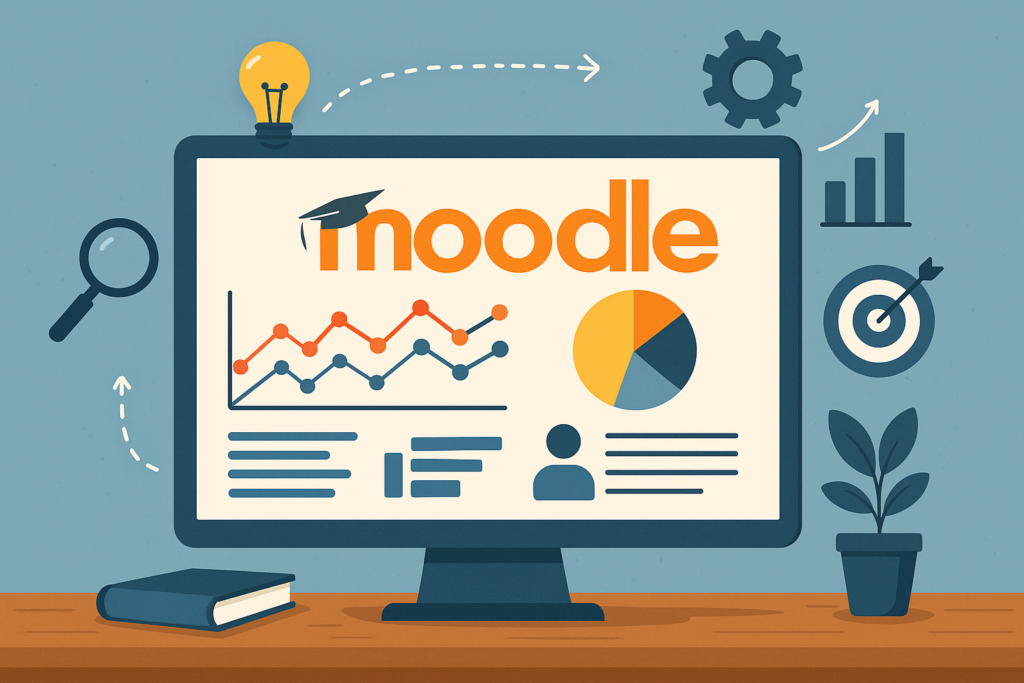
One of the most valuable features of Moodle LMS is its powerful Moodle dashboard, which serves as a central hub for learning analytics and reporting. By providing clear, actionable insights that support smarter decision-making, the dashboard transforms raw data into actionable insights.
For Students: Personalised Progress Tracking
Moodle dashboards provide learners with an overview of their performance. As a result of this level of visibility, learners are more accountable, motivated, and prepared to meet academic goals. They can view completed tasks, quiz results, upcoming deadlines, and overall progress. In addition to tracking progress within Moodle learning analytics, students can also identify areas where additional effort is needed.
For Teachers: Monitoring Engagement and Outcomes
With Moodle’s dashboard, educators have access to rich Moodle reporting tools. Teachers can instantly view which learners are actively participating, which students are falling behind, and how quizzes and assignments are being attempted by students. By receiving real engagement data, instructors can deliver timely interventions, provide personalised support, and refine teaching strategies.
For Administrators: System-Wide Performance Insights
At the institutional level, administrators can use the Moodle LMS dashboard to analyse performance across courses and cohorts. Features such as completion rates, learner engagement trends, and course-level analytics empower decision-makers to design more effective learning strategies. Administrators can also leverage these analytics to enhance curriculum planning, identify training gaps, and ensure compliance with learning objectives.
Turning Data into Actionable Insights
With integrated Moodle analytics dashboards, all stakeholders, students, teachers, and administrators gain a single, unified view of learning progress. The smooth access to insights helps us improve course outcomes, personalize learning journeys, and improve overall course efficiency. As a result, the Moodle dashboard converts static reports into meaningful actions that deliver long-term value from learning analytics.
Conclusion: Unlocking the Full Potential of Moodle Learning Analytics
The Moodle learning analytics tool has evolved into a really powerful tool for institutions, educators, and learners to derive real value from their data. Institutions can utilize Moodle’s dashboard and advanced reporting capabilities to monitor student engagement, discover gaps in the learning experience, and enhance institution-wide course effectiveness.
Different types of reports help educators to better align their teaching practice to learning behaviours, students can self-monitor their own performance against their own preferences, and administrators can formulate strategic planning and improve outcomes across the institution through evidence-based reports.
With certified integrations like IntelliBoard and LearnerScript, Moodle analytics extends even further, providing deeper visibility and scalable insights that transform how eLearning is measured and improved. There’s more to Moodle analytics than just collecting data. It’s about cultivating a culture of accountability, continuous learning, and success through analytics.
Having a smart, data-driven eLearning strategy is crucial. If you want to maximize Moodle LMS usage and implement powerful learning analytics for your organization, contact IDS Logic today.
Frequently Asked Questions
Q1. Can Moodle learning analytics be customized for different types of organisations?
Yes. Moodle LMS allows learning analytics to be tailored based on organisational goals. As an example, a corporate L&D team might focus on employee training and compliance, while a university might monitor student retention and performance. A customized Moodle dashboard and report can be customized to highlight the relevant data for each institution through custom development.
Q2. How secure is learner data within Moodle analytics tools?
The Moodle learning analytics system follows strict data protection protocols. Administrators can control which users can view sensitive reports. In addition to secure hosting and regular updates, Moodle LMS is aligned with modern compliance standards like GDPR, HIPAA, COPPA, etc., making it a safe choice for organizations that handle large volumes of learner information.
Q3. Do Moodle analytics plugins like IntelliBoard or LearnerScript affect system performance?
It is important to consider the quality of hosting and Moodle development practices when choosing plugins for eLearning analytics. Using Moodle’s certified plugins, such as IntelliBoard or LearnerScript, without slowing down the platform, you can ensure scalability and efficiency as your analytics needs grow. Partnering with experienced Moodle developers like the ones at IDS Logic further ensures scalability and efficiency.
Q4. How do organisations measure the ROI of Moodle learning analytics?
When institutions adopt Moodle analytics, they often experience higher completion rates, improved learner engagement, and lower dropout rates. Moodle LMS provides organizations with accurate, real-time insights that improve decision-making, resulting in clear, long-term value. Administrators save time on manual reporting while improving decision-making with accurate, real-time insights.