
Top Moodle Plugins for Enhancing Your eLearning Experience
Moodle has firmly established itself as a cornerstone in the digital education landscape. Renowned for its versatility and expansive capabilities as a learning management system (LMS), what makes this LMS the most popular is Moodle plugins for enhancing elearning experience. With a dynamic and growing community of over 68 million users worldwide, Moodle continues to be a preferred choice for educational institutions and corporations alike.
A key strength of Moodle is its powerful and flexible platform, which makes it easy for organizations to create highly customized and effective learning experiences. With its extensive range of plugins, Moodle’s flexibility is enhanced significantly.
Think of Moodle plugins as the turbochargers of a high-performance vehicle. They boost the LMS’s capabilities, transforming a standard eLearning environment into an engaging, efficient, and interactive educational space.
In this article, we will delve into ten essential Moodle plugins that stand out for their potential to revolutionize your eLearning setup. Each plugin has been selected for its ability to enhance productivity, facilitate interactivity, and improve overall user satisfaction.
Role of Moodle Extensions for Enhancing eLearning Experience
When you log into Moodle, the dashboard is only the surface of what the platform can offer. Moodle plugins and their types are the real power of this LMS. These addons for Moodle are powerful extensions that extend the LMS far beyond its default features, making it a versatile, scalable, and highly customized eLearning system.
You can create a powerful digital learning environment customized to your exact needs by selecting the right Moodle extensions, from reporting tools to gamification and content management.
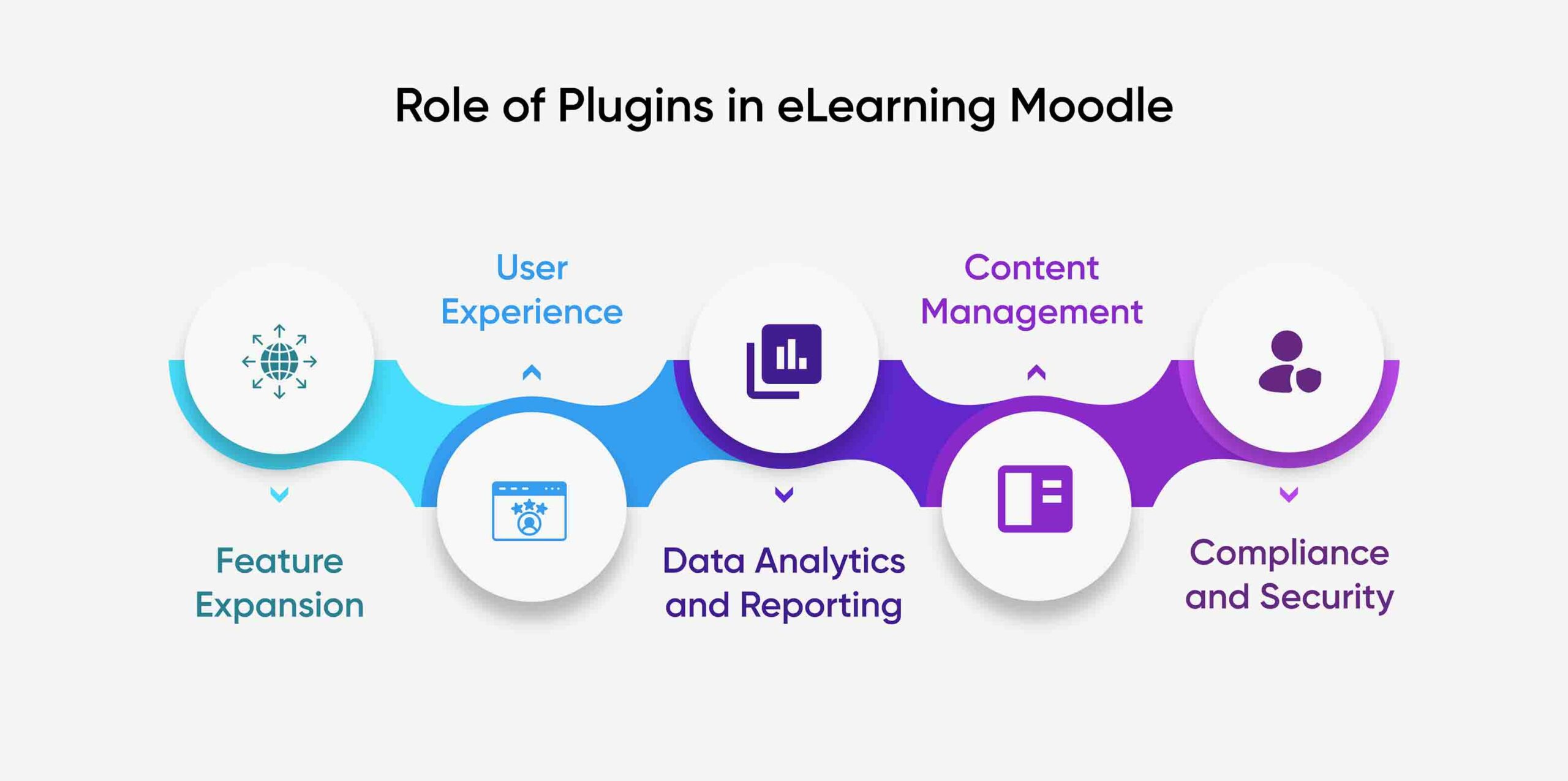
Here are the key roles of Moodle plugins for improving the eLearning experience:
- Feature Expansion
Moodle extensions significantly enhance its functionality by adding new capabilities. Take grading, for example. While Moodle offers a basic grading system, plugins allow you to implement more complex grading paradigms tailored to your specific educational model. Whether it’s advanced rubrics, peer assessments, or automated feedback, plugins can upgrade your grading processes to better align with your pedagogical goals.
- User Experience
Improving user interaction is another critical role of Moodle plug-ins. They don’t just add features; they enhance how users navigate and engage with the platform. The right plugins make Moodle more intuitive and user-friendly, reducing the learning curve for new users and improving overall satisfaction for all users.
- Data Analytics and Reporting
Effective learning management relies on powerful data analytics. While Moodle provides basic data tracking, plugins can offer comprehensive analytics and reporting tools. These advanced capabilities are invaluable for organizations that depend on data-driven strategies to boost learner engagement and outcomes. Detailed insights into learner progress, activity logs, and performance metrics enable more informed decision-making and tailored interventions.
- Content Management
As your content library grows, organizing and managing course materials can become challenging. Moodle extensions and plugins provide advanced content management solutions, allowing you to efficiently categorize, deploy, and update educational content. This ensures that both educators and learners can easily access the resources they need, when they need them.
- Integration with Third-Party Tools
The best Moodle plugins integrate seamlessly with video conferencing, CRM, and payment services. This creates a connected ecosystem where learners can attend classes, access resources, and even make payments from inside Moodle. Using such integrations reduces administrative work, saves time, and provides a unified learning experience.
- Compliance and Security
In formal education and corporate training, adherence to compliance standards and robust security protocols is important. Plugins can help ensure your Moodle setup meets necessary regulatory requirements and enhances security measures. From GDPR & HIPPA compliance tools to advanced authentication methods, these plugins safeguard your platform and protect user data.
Understanding Moodle Plug-in Types
Plugins play a major role in Moodle’s flexibility as a Learning Management System(LMS). With these different plugins, institutions can enhance functionality across a wide range of learning areas, customizing the platform to meet their specific needs. Each of these Moodle plugin types is designed with a specific purpose in mind, enhancing the platform’s flexibility and scalability.
1) Authentication Plug-ins
Authentication plugins simplify the integration of external authentication systems, allowing users to use their credentials from services like Google or LDAP to log in to your application. This helps in streamlining user access.
2) Enrolment Plug-ins
These plugins manage user enrolment into courses, supporting different methods like self-enrolment, manual enrolment, or integration with external systems.
3) Gradebook Plug-ins
Gradebook plugins extend Moodle’s grading capabilities, enabling customized grading methods, reports, and exports to meet institutional assessment requirements.
4) Theme Plug-ins
Theme plugins change the visual presentation of Moodle, providing customizable layouts and styles to enhance user experience and align with institutional branding.
5) Local Plug-ins
Local plugins are used for custom backend functionality not found in the other categories. These types of Moodle plugins are suitable for integrating institutional-specific features.
6) Report Plug-ins
Administrators and educators can use these plugins to generate reports that show user activity, course progress, and other metrics essential to their operation.
7) Content Plug-ins
Content plugins manage the types of content available in the content bank, such as H5P interactive content, allowing for rich multimedia learning experiences.
8) Filter Plug-ins
Filter plugins process and transform text within Moodle, enabling features like automatic linking of URLs or embedding multimedia content.
9) Repository Plug-ins
Repository plugins integrate external storage systems with Moodle, allowing users to access and manage files from services like Google Drive or Dropbox.
10) Backup Plug-ins
For safeguarding educational content, backup plugins offer options for automated or manual backups to back up and restore course data.
13 Important Moodle Plugins for Enhancing eLearning Experience
One of the most trusted Learning Management Systems (LMS) around the world is Moodle. Its real strength lies in its ability to be extended and customized with Moodle plugins. With these addons for Moodle, educators, trainers, and administrators can make online learning more interactive, efficient, and impactful by going beyond the default features.
It’s important to choose the right Moodle plugin based on your needs among thousands of options. Our 13 best Moodle plugins cover a wide range of critical aspects of teaching and training, including content delivery, learner engagement, gamification, and advanced reporting. These Moodle extensions have been proven to enhance the learning journey, are well-regarded within the Moodle community, and are actively maintained.
By integrating these Moodle extensions, you can transform Moodle from a basic LMS into a powerful, customized eLearning environment that meets the different needs of your users.
1. BigBlueButtonBN
BigBlueButtonBN enables real-time sharing and video conferencing through smooth integration with Moodle. It takes e-learning experience to a whole new level with features like real-time sharing of slides, chat, and even a virtual whiteboard. Here are the benefits at a glance:
- Real-time engagement
- Whiteboard Features: Allows for real-time annotation, making it easier to explain complex topics
2. H5P
The assessment process is an integral part of education, providing valuable insights into learners’ progress and understanding. H5P enhances Moodle’s assessment capabilities with interactive tools so learning is more engaging and effective. To enhance the assessment experience, educators can develop diverse eLearning content, including quiz-enabled slides, interactive videos, and branching simulations.
Variety of Assessment Types
H5P offers a diverse array of assessment types to cater to different learning needs and styles. You can create multiple-choice questions, drag-and-drop activities, fill-in-the-blank exercises, and more. This variety allows educators to design assessments that are not only comprehensive but also tailored to the specific content and learning objectives of their courses.
Interactive Content
Beyond traditional assessments, H5P enables the creation of rich, interactive content that can be seamlessly embedded into Moodle courses. This includes interactive videos, presentations, and timelines, which can be used to both present information and dynamically assess understanding. By incorporating these interactive elements, you can make learning more engaging, helping to capture students’ attention and facilitate deeper comprehension of the material.
3. Moodle Mobile
In the era of mobile learning, ensuring that your Moodle platform is mobile-responsive is essential to cater to the needs of modern learners. The Moodle Mobile plugin plays a pivotal role in making your courses accessible on smartphones and tablets, offering a seamless and convenient learning experience on the go.
Ease of Access
With the Moodle Mobile plugin, learners can access course material, participate in forums, and even take quizzes directly from their mobile devices. This level of accessibility ensures that learners can engage with course content whenever and wherever they choose, enhancing flexibility and convenience.
Offline Access
One of the standout features of the Moodle Mobile plugin is its ability to provide offline access to course material. Learners can download course content to their mobile devices and access it offline, allowing them to continue learning even in environments with limited or no internet connectivity. This feature ensures that learning remains uninterrupted, regardless of external factors.
4. Grade Me
Grading is a crucial but often time-consuming task for educators. The Grade Me plugin offers a solution by streamlining the grading process, providing a simplified yet comprehensive grading system that saves time and improves efficiency.
Automated Grading
With the Grade Me plugin, educators can set specific grading criteria for assignments and assessments. Once the criteria are established, this Moodle plugin automates much of the grading process, significantly reducing the time and effort required to assess student work. This automation not only speeds up the grading process but also ensures consistency and fairness in grading.
Feedback Integration
In addition to automated grading, the Grade Me plugin also allows educators to provide feedback directly within the grading interface. This integration of feedback forms makes it easier for educators to provide detailed and constructive feedback to students, improving the learning experience and facilitating student growth and improvement.
5. Configurable Reports
For administrators seeking deeper insights into course effectiveness and student engagement, the Configurable Reports plugin is an invaluable tool. This Moodle plugin enables the creation of custom reports tailored to your institution’s unique requirements, providing a comprehensive view of key metrics and performance indicators.
Customizable Reports
With Configurable Reports, administrators can design reports that concentrate on specific metrics, such as student performance, course engagement, or assessment outcomes. By customizing reports to align with your institution’s goals and objectives, you can gain a more adequate understanding of how your courses are performing and where improvements may be needed.
Data Export
In addition to customizable reports, Configurable Reports also offers easy data export capabilities. Administrators can quickly export report data for further analysis or sharing with stakeholders, facilitating data-driven decision-making and enhancing transparency within the institution.
6. Turnitin
The Configurable Reports plugin is a powerful tool for administrators seeking deeper insights into course effectiveness and student engagement. This Moodle plugin type allows for the creation of custom reports that are tailored to your institution’s unique requirements, providing a comprehensive view of key metrics and performance indicators.
Customizable Reports
One of the key features of the Configurable Reports plugin is its ability to create customizable reports. Administrators can design reports that focus on specific metrics, such as student performance, course engagement, or assessment outcomes. By tailoring reports to align with your institution’s goals and objectives, you can gain a more detailed understanding of how your courses are performing and where improvements may be needed.
Data Export
Another valuable feature of the Configurable Reports plugin is its data export capabilities. Administrators can easily export report data for further analysis or sharing with stakeholders. This functionality facilitates data-driven decision-making and enhances transparency within the institution by allowing administrators to easily share important insights with key stakeholders.
7. Adaptable theme
A well-designed interface can make a world of difference in user experience, and the Adaptable Theme plugin brings this polished edge to Moodle.
Visual Customization
The Adaptable Theme plugin goes beyond surface-level changes. It enables a thoughtful design process, allowing administrators to align the Moodle interface with the unique look and feel of their organization. From colour schemes to typography, every aspect can be customized to create a cohesive and professional appearance that reflects your institution’s branding.
User-friendly Interface
This is one of the best Moodle plugins that doesn’t just focus on aesthetics; it also enhances usability. This Adaptable Theme plugin empowers administrators to strategically place features and buttons, optimizing the interface for logical navigation. It reduces the need for users to click through multiple pages or scroll excessively, improving efficiency and overall user satisfaction.
8. Quizventure
Standard quizzes can sometimes feel like a box-ticking exercise. However, Quizventure revolutionizes this experience by enhancing the interactive elements of assessments.
Engagement Boost
Quizventure goes beyond traditional quizzes by incorporating interactive elements that engage learners on a deeper level. It’s not about mere game-playing; it’s a cognitive approach to learning. These interactive quizzes require learners to think more critically, encouraging a more profound and meaningful interaction with the course material. This heightened engagement can lead to improved understanding and retention of the content.
Instant Feedback
One of the key features of Quizventure is its provision of instant feedback. Learners receive real-time insights immediately after answering each question. This feedback loop is crucial for academic progress, as it allows learners to understand their mistakes and misconceptions right away, enabling them to correct their understanding and improve their performance as they progress through the quiz.
9. Attendance
Marking attendance in a digital setting is not just about taking a roll call; it’s a valuable data point for understanding student engagement and participation.
Automated Tracking
Attendance tracking with this Moodle plugin is not passive; it’s a dynamic system that recognizes various forms of student engagement. Whether students are logging in, submitting assignments, or participating in forums, all these activities are automatically logged. This comprehensive tracking provides a comprehensive view of student participation and engagement over time.
Customizable Parameters
One of the key features of this plugin is its flexibility and customization options. Educators can set the parameters that count as ‘attendance’ based on the specific requirements of their course. Whether it’s forum participation, quiz submissions, or other activities, educators can customize the attendance tracking system to align with their course objectives and assessment criteria.
10. Level Up – Moodle Leaderboard Plugin
Understanding what motivates students to engage and learn is key to creating a successful learning environment. Level Up! seeks to address this by introducing a reward system into Moodle that aims to incentivize and motivate students.
Incentive Structure
The core of Level Up is its incentive structure. It’s not just about accumulating points; it’s about what those points represent—engagement, improvement, and achievement. The system transforms points from mere numbers into meaningful markers of a student’s journey through the course. This gamified approach can make learning more engaging and enjoyable for students, motivating them to actively participate and progress.
Leaderboards
Level Up also incorporates leaderboards, tapping into the social aspect of learning. By knowing where they stand among their peers, students are not only motivated to outperform others but also to collaborate and learn from each other. This competitive yet collaborative environment can cultivate a sense of community and drive students to excel.
11. BigBlueButton: Virtual Classrooms
A Moodle extension designed for education and training, BigBlueButton offers a live, interactive virtual classroom. It supports breakout rooms, whiteboards, polls, real-time chat, screen sharing, and session recording. It differs from generic video tools and is specifically designed for education and training.
12. Custom Certificate
Moodle’s Custom Certificate plugin is one of the most popular plugins for rewarding learner achievement. With this plugin, educators and organisations can design fully customizable PDF certificates that are automatically generated when a course is completed. In contrast to standard templates, this extension allows you to customize your certificates by adding logos, signatures, images, and dynamic fields.
Using this Moodle plug-in, institutions can effectively celebrate milestones in an instant, boost learner engagement and motivation, and ensure that all certifications are branded continuously. Combining it with gamification tools like the Moodle leaderboard plugin further motivates learners by linking certificates with visible rankings.
13. Badge Ladder – Moodle Leaderboard Plugin
This Moodle leaderboard plugin tracks and displays student achievements to gamify the learning experience. It works by awarding badges for completing specific tasks, activities, or milestones within a course. To motivate learners, these badges are aggregated into a visual leaderboard, which displays progress and friendly competition.
The plugin promotes engagement, encourages participation, and provides educators with an instantaneous overview of learner performance. The plugin is a great resource for interactive and gamified Moodle courses.
How to Install Plugins in Moodle?
Follow the steps below to install a Moodle plugin:
- Open the Site Administration option
- Choose Plugins → Install plugins.
- Upload the plugin (downloaded from the Moodle Plugins Directory).
- Follow the instructions to install and configure the plugin settings.
Leveraging Moodle Extensions to Drive eLearning Success
With solutions like H5P, Quizventure, and game-making digital lessons that make learning more dynamic and enjoyable, interactive learning remains a priority. In addition, synchronous teaching Moodle plugins like BigBlueButton make it easy for educators to host live classes with minimal friction, creating real-time interactions that replicate a classroom setting. Using tools like the Moodle leaderboard plugin, learners can be motivated by competition and rewards through gamification elements, further boosting engagement.
Administrators also have to manage workload-focused tools such as Configurable Reports and Attendance that make the grading, reporting, and compliance process much easier.
The organization must, however, always evaluate compatibility with the version of Moodle it is running, review feedback from its community, and prioritise security. When aligned with strategic goals, the right mix of Moodle extensions can significantly improve course delivery, enhance engagement, and create a cohesive eLearning ecosystem that grows with your institution’s needs.
In Conclusion
The plugins discussed above have the potential to fundamentally transform the way you utilize Moodle for educational purposes. Far from being mere addons for Moodle, these plugins are pivotal tools that can significantly impact your eLearning outcomes.
Each of these plugins serves a unique role, some enhance administrative efficiency, while others enrich the learning process. Some plugins even manage to do both, offering a comprehensive solution for educators and administrators alike. There are endless possibilities, from gamification tools that boost motivation to plugins that simplify course management, improve data reporting, and improve user experience. The right addons can make your Moodle eLearning environment more powerful and scalable, but they also increase your learning experience.
For anyone looking to elevate their eLearning programs, these Moodle plugins are not just useful; they’re practically essential. More to this, if you are looking for custom plugins, Moodle plugins development services are also available.
Frequently Asked Questions (FAQs)
Q1) What are Moodle plugins, and why are they important for eLearning?
Moodle plugins work as an extension that extends the functionality of your LMS in Moodle. With the right Moodle addons, organisations can create an engaging, scalable, and learner-friendly eLearning platform that is more engaging, scalable, and learner-friendly. These features include gamification, advanced reporting, and content management.
Q2) Which Moodle plug-ins are essential for improving learner engagement?
A variety of Moodle addons are widely used to increase learner engagement, including BigBlueButton (for virtual classrooms) and H5P (for interactive content). Moodle courses become more interactive, collaborative learn, and motivated by features like leaderboards, badges, and certificates with these plugins.
Q3) Can Moodle plugins help with reporting and analytics?
Moodle plugins provide advanced reporting and analytics tools that go beyond the LMS’s default features. Learner performance, activity tracking, and progress can be tracked with plugins like Configurable Reports and IntelliBoard. With this information, educators and administrators can make better decisions about training outcomes through data-driven decisions.
Q4) How do Moodle plugins support compliance and integration needs?
Moodle extensions are essential for eLearning compliance and security. For example, plugins support GDPR compliance, advanced authentication methods, and certificate generation. Several plugins also integrate Moodle with third-party systems such as video conferencing tools, CRMs, and payment gateways, resulting in a streamlined digital learning ecosystem.