Growth with Digital Marketing: Tips to Accelerate the Business
Digital marketing isn’t standing still; it’s moving faster than ever. It’s not surprising that businesses are using data-driven campaigns to scale their brands and increase sales. As we step into 2025, businesses are using AI-powered tools to connect with their audience in new ways. You need to have a clear digital strategy that adapts to new trends and technologies if you want to stay on top of these changes.
The right approach to online marketing can help you gain visibility, reach the right people, and turn browsers into loyal customers, regardless of whether you’re a small startup or a growing company. From smarter content marketing to artificial intelligence in marketing to personalized customer experiences, we’ll explore the top digital marketing trends and strategies shaping 2025 and beyond.
This blog will provide you with the actionable tips you can start implementing right away, so that your business is more than just competing online; it is leading.

Understanding Digital Marketing and Strategy
This type of marketing is all about connecting with the right people at the right time through the use of platforms such as search engines, social media, emails, and websites. It uses platforms such as search engines, social media, and websites. As a result, any company looking to increase online visibility, attract new customers, and keep them engaged can target their audience precisely, track each click, and measure the results in real time.
However, digital marketing strategies are a way to utilize these online channels to grow your business. To achieve the best return on your marketing investment, you have to understand your audience, analyze your strengths and weaknesses, keep an eye on your competitors, and choose the channels that will deliver the best results.
Creating the best strategies requires data. By analyzing insights across your business, you will be able to decide where to focus your efforts, which platforms to test, and how to communicate your message in a way that feels relevant and personal. Brands that succeed in 2025 will be distinguished by that data-driven approach.
Unlike traditional marketing approach of one-size-fits-all, digital marketing ensures that the users have meaningful interaction through broadcast media.
Digital Marketing Strategies Every Business Needs: Growth Tips for 2025 and Beyond
To gain visibility, attract the right audience, and grow your business, you need a mix of marketing strategies that are tailored to the audience behavior, technology trends, and goals of the business. Below are some of the most efficient and effective marketing strategies for your business.
Search Engine Optimization (SEO) – Building Sustainable Visibility
Even today, SEO is one of the most powerful digital tools. SEO drives long-term growth by making your website’s position better on search engines, and then getting you more consistent organic traffic by optimizing the pages for user intent, improving site speed, or building credible backlinks.
Key SEO areas to focus on:
On-page SEO
Focus on optimizing everything relative to the keyword, like headings, metadata, etc., so that it aligns closely with the intent of the query.
Off-page SEO
Build authority through guest blogging or insights from backlinks and brands mentioning you.
Technical SEO
Improve site speed, mobile experience, and structured data.
Local SEO
Pick up local customers by optimizing for “near me” search results and keeping your Google Business Profile up-to-date.
E-commerce SEO
E-commerce SEO: Optimize product descriptions, reviews, and structured data for different online stores.
Pay-Per-Click (PPC) Advertising – Fast and Targeted Growth
PPC campaigns provide instant visibility across Google, social platforms, and partner websites. They help businesses capture high-intent customers at the right moment.
Here are the main types of PPC campaigns:
Search ads
These ads appear at the top of Google search results for relevant searches.
Display ads
These ads appear in banners or visually interesting formats, which tend to be more noticeable and get more impressions than traditional PPC search ads, making them much more effective at generating awareness.
Retargeting ads
These ads help reconnect with people who left your website without making a purchase.
Social ads
These ads allow for targeted ad campaigns on Facebook, Instagram, LinkedIn, or TikTok.
Content Marketing – Educate, Engage, and Convert
Content marketing builds trust and authority in the marketplace. By providing valuable information, regardless of whether it’s through blogs, videos, whitepapers, etc., you are educating people while leading them into your solution.
Popular content formats in 2025:
Blogs/Articles
Boost SEO and position yourself as a genuine authority.
Videos
Explainers, reels, and tutorials generate high engagement.
Podcasts & webinars
Build a more meaningful connection with your audience.
Infographics
Break down complex topics into shareable images.
Ebooks & case studies
Work as lead magnets for B2B campaigns.

Social Media Marketing – Building Conversations That Matter
There is no question that social media is one of the most compelling ways to reach and engage audiences. However, each platform requires a custom-made strategy:
Facebook & Instagram
Awesome for storytelling, reels, and retargeting originated from engagement.
Best for B2B thought leadership and professional networking opportunities.
TikTok & YouTube Shorts
Short entertaining content with a great chance of going viral.
X (Twitter)
Real-time conversations and updates in your industry.
Email Marketing – The Personal Touch at Scale
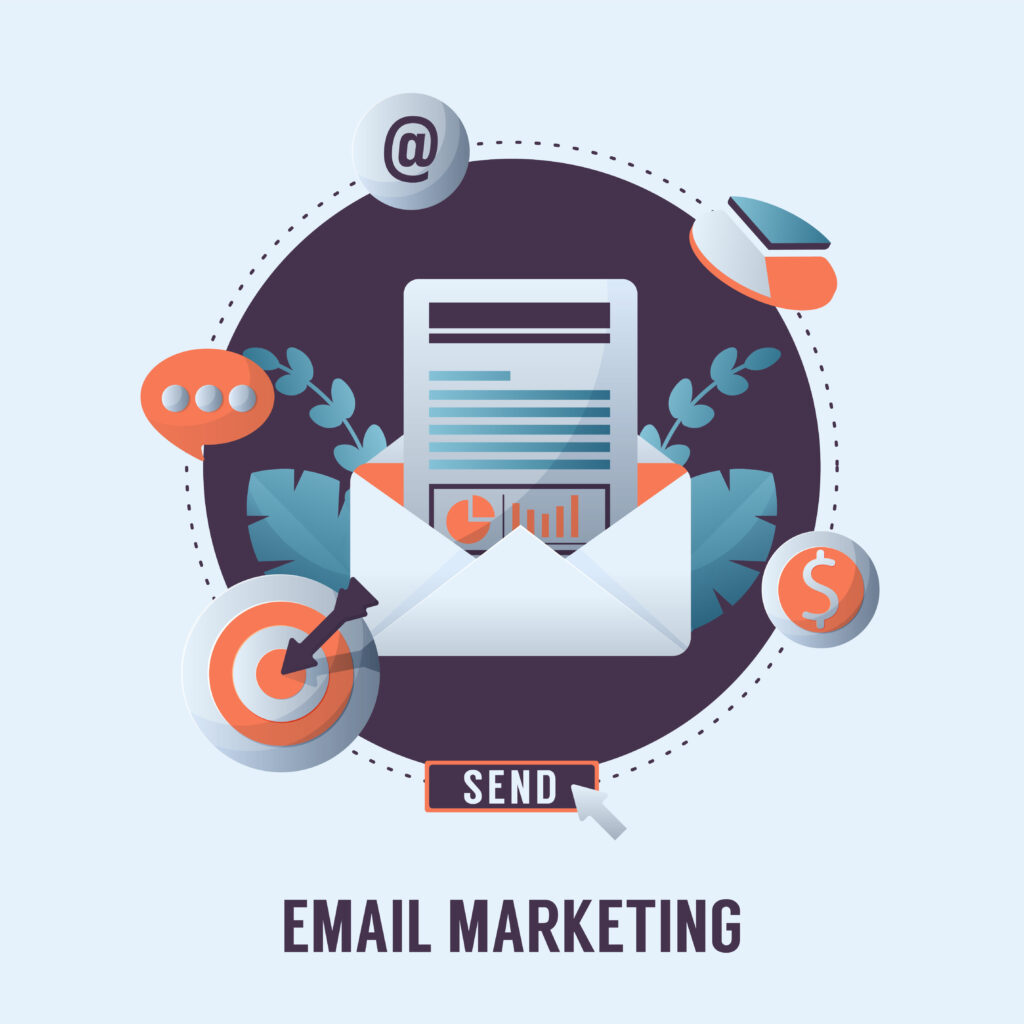
Email continues to deliver one of the highest ROIs in marketing. With personalization and automation, brands can nurture leads and retain customers.
Effective email campaigns include:
Welcome series
Connect with subscribers starting the day they join.
Lead nurturing sequences
Lead users along the buyer journey.
Cart abandonment emails
Recover forgotten sales opportunities with reminders.
Re-engagement campaigns
Return lost subscribers.

Marketing Automation & AI – Smarter, Faster, More Personalized
The marketing landscape has changed in 2025. Automation and AI tools make it possible to save time while making every customer interaction feel personal.
How businesses leverage automation today:
- Automated email sequences and lead scoring.
- AI chatbots that provide instant customer support.
- Personalized website content based on user behavior.
- Predictive analytics that identify high-value leads.

Influencer & Affiliate Marketing – Driving Trust Through Advocacy
Consumers put more trust in people than they do in advertisements. This is why influencer and affiliate marketing remain critical growth drivers.
Influencer marketing
Collaborate with creators who are in your niche.
Affiliate marketing
Collaborate with affiliates who promote your brand and get a commission for doing so.

Video Marketing – The King of Engagement
Video is still the most popular digital format in 2025. Video can be short, interactive, or long-form depending on your audience.
There are three effective types of video:
- Short-form reels to engage your audience quickly.
- Long-form tutorials and explainers.
- Live sessions and webinars allow real-time engagement.
- Product demos to assist in buying decisions.
Voice Search & AI Assistants – The Future of Search
As smart speakers and voice assistants become more common, businesses need to optimize for conversational queries as well.
Voice SEO strategies:
- Use long-tail, question-based keywords.
- Structure answers in FAQ format.
- Use schema markup to increase snippet visibility.
- Local optimization is key for near me searches.
Web Design & User Experience (UX) – Turning Visitors into Customers
Your website is frequently the initial touchpoint. A poorly designed, slow website can lose customers.
UX Essentials for Businesses:
- Mobile-first, fast-to-load design.
- Intuitive design and easy-to-follow CTAs.
- Accessibility features and consideration for all use cases.
- AI-oriented heat maps and chatbots to enhance journeys.
Building a Digital Marketing Strategy That Works
Creating a successful digital marketing plan is more than following a checklist. It’s about making smart choices that connect with your audience and push your business forward. Here are the key steps.
Start With Your Customers
Your audience should always be at the center of your strategy. If you don’t understand who buys from you, why they buy, and where they spend time online, your campaigns won’t click.
Ways to dig deeper into your audience:
- Identify the digital channels they use the most.
- Understand their challenges and emotions, then speak their language.
- Build buyer personas to predict patterns and customize campaigns.
- Respect cultural nuances and local preferences.
- Explore collaborations with influencers who already have your trust.
- Use automation to personalize campaigns and segment audiences effectively.
Take Stock of What You Already Have
Look over your website, blogs, social media platforms, advertising, and email lists before launching new tactics. Link each channel to your company’s core goals. If you want to grow revenue, you need to identify which platforms or campaigns are generating revenue. Focus on the ones that work and cut back on those that don’t.
Keep Your Focus on Value, Not Just Numbers
You can get stuck on sales figures and product features. But what really drives growth is showing people what they get from your product. Show them how it solves a problem, how it relieves them, or how it brings them joy. Customers are more likely to buy if they see how their lives are improved.
Measure What Matters
Tracking performance is non-negotiable. But vanity metrics can be misleading. Instead, watch KPIs that relate to your main objectives, such as lead conversions, sales revenue, and customer retention.
Best Practices for remaining on task:
- Do not treat KPI metrics as immutable. Review them continuously and adjust as necessary.
- Establish regular performance check-ins.
- Test, measure, and optimize campaign performance.
- Understand how to filter out noise, so you can pay attention to what has an impact.
Define Your Goals Clearly (SMART Goals)
Strong strategies start with strong goals. Make them Specific, Measurable, Achievable, Relevant, and Time-bound. Set both short-term (3–6 months) and long-term (12+ months) targets, and keep checking whether you’re on track. Review your goals quarterly so you can adjust to changing market conditions or customer needs.
Know Your Market and Competitors
Examine your competitors closely, not to copy them, but to see what opportunities they missed. Find out how they rank on search engines, what content performs well, how they structure their ads, and what engages their audiences. Use these insights to establish your unique position in the market.
Review Your Digital Assets
Your website, blog, videos, ads, and emails are your building blocks. Audit them carefully.
- Make sure your site is optimized for speed, mobile, and errors.
- Refresh old blog posts with updated content and new keywords.
- Track engagement and conversions for each channel.
- Optimize email lists and social content for reach.
Pick the Right Channels for Growth
Every business needs a different platform. Choose channels that deliver the best ROI for your audience. Use cross-channel retargeting to re-engage people who have interacted with your brand but did not convert. Balance organic growth (SEO, blogs, social engagement) with paid campaigns (Google Ads, social ads).
Execute With a Clear Plan
Proper structuring is essential to success. Build a 12-month plan with clear milestones. Align all campaigns, content, email, social, and paid, so they work together instead of in silos. Content can be scheduled and tracked in real-time with automation tools, so you can stay consistent.
Automate and Personalize
AI and automation are changing the game in 2025. From chatbots to predictive analytics, these tools save time while making campaigns more personal. Use automation for lead nurturing, email sequences, and customer segmentation. Personalization engines powered by AI can increase conversions by tailoring offers and content to individual preferences.
Monitor, Adjust, Improve
Test, review, and tweak your digital strategy regularly to stay on top. Run A/B tests on ads and landing pages, track conversions, and adjust messaging to optimize them. Hold monthly strategy reviews to make sure your efforts align with your business goals.
Tracking Success with Digital Marketing Metrics
In the end, real growth comes from measuring outcomes, not running campaigns. When marketers aren’t tracking accurately, they make guesswork decisions. As a result, data shows what works, what doesn’t, and where they should double down. Data helps businesses understand user behaviors, engagement levels, and conversion patterns. Teams can refine campaigns, reduce wasted spend, and improve ROI over time.
Why Performance Tracking Matters?
More intelligent decision-making
Use analytics instead of instinct or assumptions.
Better ROI
Ensure all rupees or dollars invested into marketing are producing actual ROI or contributing to overall business growth.
Know your Audience
Know your users’ interests, preferences, and pain points to create more targeted campaigns.
Key Marketing Metrics You Should Watch
To keep strategies on track, businesses must focus on performance indicators that show how users interact with their brand across channels.
Website Visitors
Monitoring traffic highlights how many people land on your site and which sources bring them there (organic search, ads, referrals, or social media). Segment data by source to find out which channel is most effective.
Bounce Rate
To keep visitors exploring, improve page speed, sharpen content relevance, and use stronger CTAs instead of making them exit after one page.
Time on Site & Pages Viewed
How long users stay and how many pages they browse shows how engaging your content is. Heatmap tools can highlight where users drop off and what captures their attention.
Conversions: Turning Visitors into Customers
Conversion Rate
This shows the percentage of visitors who complete the desired action (form fill, purchase, or sign up). Conduct A/B tests on CTAs, layouts, and offers to see which converts the best.
Customer Acquisition Cost (CAC)
CAC reveals the cost of acquiring a customer across all marketing channels. Lowering this ensures long-term profitability. Strengthen organic reach with SEO, blogs, and social campaigns.
Cart Abandonment Rate
High drop-offs at checkout often indicate friction in the buying journey. Simplify checkout steps, reduce hidden costs, and send follow-up reminders.
Email Performance Metrics
Open Rate
Shows how many people opened your emails. Poor numbers typically reflect weak subject lines or low sender credibility. Try different styles of subject lines, apply methods to enhance timing, and offer consistent value to earn trust.
Click-Through Rate (CTR)
Shows how many recipients engage with links inside emails. Use clear buttons, keep CTAs above the fold, and write concise copy.
Paid Campaign Performance
Return on Ad Spend (ROAS)
ROAS reveals how much revenue your ads generate per dollar spent. Tighten targeting, refresh ad creatives, and optimize landing pages.
CPC & CPA
CPC (cost per click) and CPA (cost per acquisition) are two measurements of the efficiency of paid campaigns. Use negative keywords, refine the ad groups, and monitor your quality scores.
Social Media Growth
Engagement Rate
Likes, comments, shares, and clicks compared to reach show how interactive your audience is. Post at high-engagement times and use interactive formats like polls.
Follower Growth Rate
This tracks how quickly your community expands online. Encourage user-generated content and participate in trends for faster visibility.
Long-Term Customer Metrics
Customer Lifetime Value (CLV)
CLV estimates how much revenue you can expect from a customer over their journey with your brand. Boost loyalty with personalization, rewards, and value-driven experiences.
Churn Rate
The rate at which customers leave or stop engaging with your brand. Run reactivation campaigns, offer tailored discounts, and maintain consistent communication.
Conclusion
Developing an effective digital marketing strategy is more than just being online; it’s also about standing out from your competition. The key is finding the right mix that matches your business goals, including search engine optimization and paid campaigns, engaging content, social media, and intelligent automation.
A successful brand learns, adapts to new trends, and measures every move. As a result, you can not only attract more leads but also build trust, authority, and long-term customer relations.
With IDS Logic, businesses in India and beyond can turn these strategies into real results. In our team, we combine proven expertise with innovative technologies to drive measurable results. We can help you with SEO, sharper campaigns, or a complete digital marketing strategy.
Ready to grow faster with digital marketing? Explore our Digital Marketing Services and let’s build the next chapter of your business success together.
Frequently Asked Questions (FAQs)
Q1) What digital marketing strategy helps re-engage users across the web?
Using remarketing is one of the best ways to re-engage users. By using remarketing, businesses can target people who have already visited their website, clicked on their ads, or interacted with their content, but have not converted. With remarketing, your brand is kept visible, builds trust, and improves conversions over time by showing targeted ads across Google and social media.
Q2) Why should we partner with a digital marketing agency?
By partnering with a digital marketing agency like us, you can access specialists in SEO, PPC, content marketing, social media, and automation. By partnering with experts, you can avoid the trial-and-error approach and invest directly in the most effective strategies. Each campaign is data-driven, measurable, and designed to maximize ROI through agency insight, advanced tools, and analytics.
Q3) How often should a business revisit its digital marketing strategy?
The best way to ensure that your strategy aligns with your business goals is to review it once a year. However, quarterly reviews are recommended because digital marketing constantly changes. Changing algorithms, customer preferences, and new platforms can drastically alter results. Your campaigns should be reviewed regularly to ensure they remain relevant and relevant to your market.
Q4) What mistakes should businesses avoid in digital marketing?
Setting unrealistic goals and not monitoring competitors can also result in business failure. Among the most common mistakes are failing to identify a clear target audience, ignoring analytics, and focusing too much on one channel. As new trends emerge, you will need to keep your eye on video marketing, AI-driven personalization, and voice search optimization to ensure campaigns remain efficient.
Q5) What are the core elements of a strong digital marketing strategy?
Creating a successful digital marketing strategy requires a combination of key elements. Together, they form a framework for achieving consistent results and achieving growth in the long run.
- Defined objectives: Clear, measurable goals such as lead generation, brand awareness, or sales growth.
- Target audience: An in-depth understanding of customer personas, pain points, and behaviours.
- Unique value proposition: A strong brand message that sets you apart from competitors.
- Multi-channel approach: A mix of SEO, PPC, content, social media, and automation to reach audiences at different touchpoints.
- Data-driven optimisation: Continuous measurement and adjustment using analytics to improve performance.