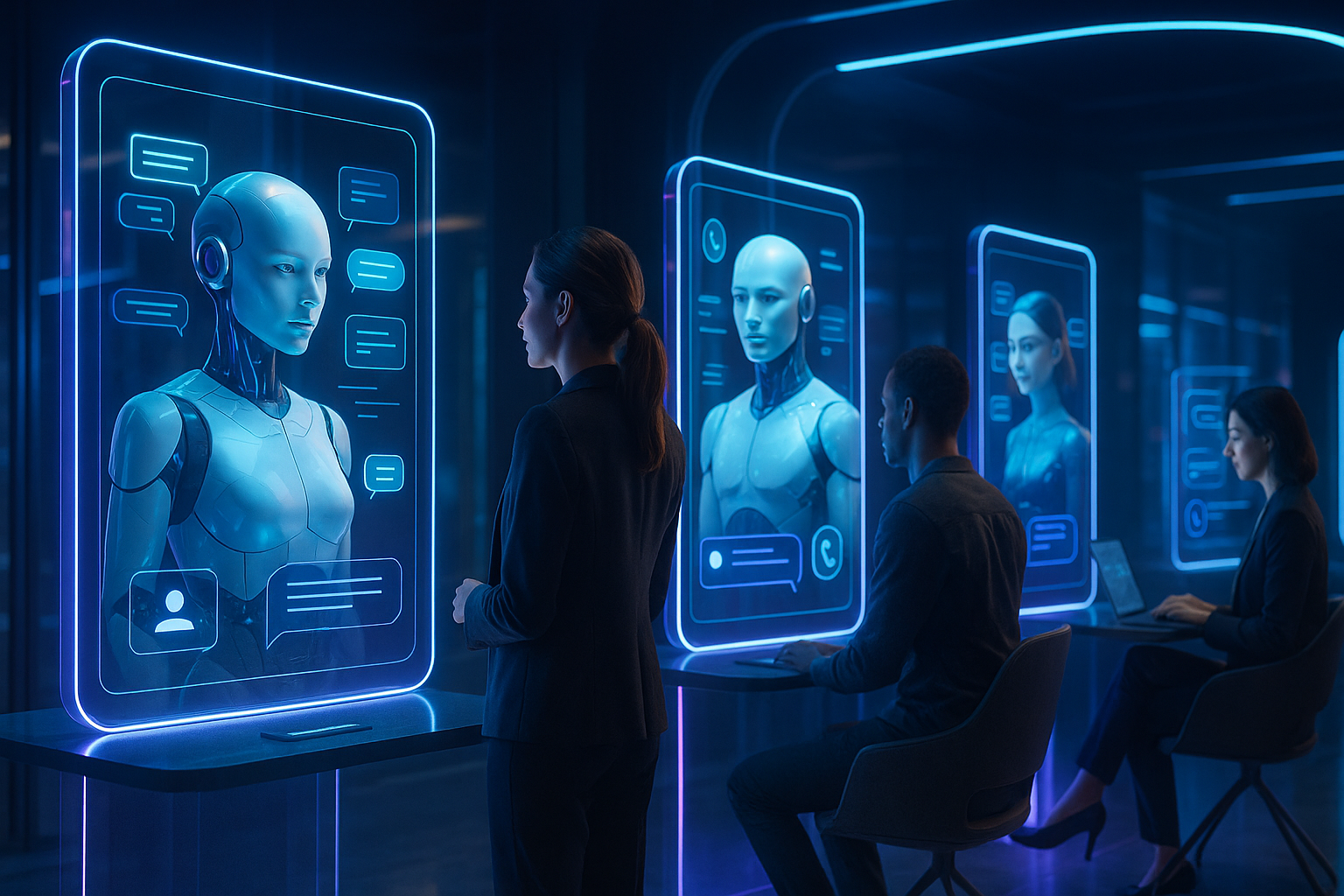
AI Chatbots and Virtual Assistants: Transforming Customer Experience in 2026
With today’s fast-paced digital world, customers expect immediate, accurate, and personalised responses no matter where they are. In order to keep up, businesses across industries are adopting artificial intelligence chatbots and virtual assistants to deliver faster and more meaningful customer experiences.
The use of AI chatbots for customer experience has grown rapidly in recent years. A recent report predicts that the global chatbot market will touch nearly USD 19 billion by 2030, fuelled by widespread adoption across sectors like retail, banking, travel, and healthcare. In India, the trend is no different, more organisations are integrating chatbots into their customer service systems to offer seamless support and reduce pressure on human teams.
Unlike early chatbots that often left customers frustrated, today’s AI virtual assistants use conversational AI, Natural Language Processing (NLP), and speech recognition to engage users in natural, solution-driven conversations. They can understand intent, resolve complex queries, and even make personalized recommendations, creating experiences that feel truly human.
As businesses shift towards automation, the benefits go beyond efficiency. Intelligent chatbots help reduce operational costs, improve response times, and enhance brand loyalty by ensuring 24/7 assistance. Customers who receive timely and accurate support are more likely to trust a brand and return.
Today, virtual assistants in customer service are not just optional tools, they’re transforming how companies connect with people. From answering basic FAQs to managing entire workflows, AI chatbots are redefining what customer experience means in the digital era.
This blog explores how these technologies are reshaping business-customer interactions, the real-world benefits they bring, and the key steps for implementing AI virtual assistants for CX successfully.
Chatbots and the New Age of Customer Service Experience
Customer expectations are evolving faster than ever. Today, people want instant answers, round-the-clock availability, and personalised attention, all without waiting on hold. For businesses, meeting these demands using only human agents has become nearly impossible. This is where AI chatbots and virtual assistants step in to redefine customer experience.
In a world that thrives on speed, businesses can no longer afford slow or inconsistent support. Whether it’s tracking an order, resolving a payment issue, or answering a simple query, customers expect help within seconds. AI-powered chatbots make this possible by providing 24/7 support that’s fast, consistent, and accurate.
By combining automation with human-like interaction, these intelligent systems ensure that every customer feels heard and valued. They can handle thousands of conversations simultaneously, something no human team could achieve while maintaining high-quality service. This not only keeps customers satisfied but also reduces burnout for human agents, allowing them to focus on complex issues that truly need empathy and expertise.
Technologies Powering AI Chatbots and Virtual Assistants
The secret behind this transformation lies in the powerful mix of modern technologies driving AI chatbots for customer experience.
- Natural Language Processing (NLP)
NLP enables chatbots to understand human language, recognise intent, and extract meaning from a conversation. It allows customers to interact naturally, just as they would with a human agent, without needing specific commands or phrases. - Machine Learning (ML)
Machine Learning helps chatbots get smarter over time. Every interaction teaches them something new, improving how they respond to questions or detect patterns. The more they learn, the more accurate and relevant their replies become. - Conversational AI
Conversational AI takes chatbots a step further. It adds emotional intelligence, context awareness, and personalisation. This means chatbots can identify a customer’s mood, remember past interactions, and respond with empathy, leading to more engaging and satisfying conversations
How Do AI Chatbots and Virtual Assistants Improve Customer Experience?
Modern businesses deal with a constant flood of customer queries every day. Customers want quick, accurate answers, but human agents can only handle so much. This is where AI chatbots for customer experience make a real difference. These smart tools can handle repetitive questions, automate responses, and engage customers just like a real person, but faster and at scale.
At their core, chatbots and virtual assistants are AI-powered programs that understand and respond to user messages in natural language. They use Natural Language Processing (NLP) and data from customer interactions to interpret intent, provide accurate answers, and even complete simple tasks. By automating common queries, businesses can reduce wait times and free up human agents to focus on complex issues that need personal attention.
A major benefit of implementing AI virtual assistants for CX is their ability to collect and analyse customer data. Every chat helps businesses learn more about user pain points, preferences, and expectations. This insight can then be used to personalise services, improve products, and maintain stronger customer relationships.
Companies also gain valuable performance metrics, from average response time to customer satisfaction scores, helping them refine their support systems. With faster resolutions and personalised conversations, customers enjoy smoother journeys and stay loyal for longer.
In 2026, leading global brands are already reaping the benefits of AI chatbots in customer service. For example, many eCommerce and banking companies have seen reduced call volumes and higher satisfaction rates after integrating conversational AI into their customer touchpoints. These virtual assistants can easily connect with CRM systems, helpdesks, and messaging platforms without major technical changes.
The outcome? Businesses cut operational costs, deliver round-the-clock service, and strengthen brand trust. For customers, it means faster help, less frustration, and a more personalized experience at every step. AI chatbots and virtual assistants have evolved from basic support bots into reliable digital partners, transforming how businesses connect, serve, and retain their customers.
Why Automation Matters for Modern Customer Experience (CX)?
Customers expect quick, effortless, and personalised service, anytime, anywhere. Meeting these expectations manually is no longer practical. That’s why automation, powered by AI chatbots and virtual assistants, has become the backbone of modern customer experience.
Automation ensures that support is available 24/7, answers are instant, and responses are consistent across all touchpoints. Repetitive questions, such as order tracking or password resets, are handled automatically, freeing human agents to focus on complex and emotional issues that need human judgement. This balance of speed and empathy creates more efficient operations and happier customers.
The Power of AI Chatbots in Transforming CX
AI chatbots for customer experience have become the face of digital transformation in customer service. From websites and mobile apps to WhatsApp and social media platforms, these intelligent virtual assistants provide instant help, creating the first layer of meaningful customer engagement. Businesses across India now rely on chatbots as a key part of their digital-first customer service strategy.
Always Available: 24/7 Support and Instant Resolutions
Unlike human teams that work fixed hours, AI chatbots operate around the clock. They can assist a customer late at night, during holidays, or across different time zones, without delay. By delivering instant responses, they eliminate long wait times and improve overall satisfaction, helping businesses reduce customer churn and maintain loyalty.
Managing High Volumes and Repetitive Queries
One of the biggest advantages of AI chatbots in customer service is scalability. A single chatbot can manage hundreds or even thousands of conversations at once, something no human team could match. Most customer interactions are repetitive, involving FAQs or simple requests like checking delivery status or billing details. By automating these, chatbots reduce workload and ensure that every query receives quick attention, even during busy hours.
Personalized Interactions at Scale
With access to CRM data and customer profiles, AI virtual assistants can personalise every conversation. They remember names, purchase history, and preferences, and use this context to recommend relevant products or services. This level of personalisation builds trust and strengthens relationships which is a crucial factor in retaining customers in competitive markets.
Seamless Collaboration Between Bots and Humans
Smart chatbots know their limits. When a query becomes too complex or emotional, they smoothly hand it over to a human agent, along with all previous chat details. This handoff saves customers from repeating themselves and ensures faster, more accurate resolutions. The result is a seamless customer journey powered by both human empathy and AI efficiency.
Boosting Sales and Customer Retention
Beyond customer support, AI chatbots play a growing role in sales and marketing. Acting as virtual shopping assistants, they recommend products, share offers, and guide customers through checkout. This reduces cart abandonment and increases conversions. Studies show that businesses using conversational AI for sales see up to a 25–30% increase in customer retention and higher average order values.
Benefits of AI Chatbots and Virtual Assistants in Customer Service
Implementing AI chatbots for customer experience and virtual assistants in customer service brings many benefits for businesses and their customers.
Improved Customer Experience
With the help of instant replies, 24/7 availability and personalized chat flows, chatbots lift the overall customer experience. When customers feel heard and helped fast, loyalty goes up.
Boosted Efficiency & Productivity
By automating routine queries and using AI virtual assistants for CX, businesses let human agents focus on tougher problems. This drives better productivity and smoother operations
Significant Cost Savings
Businesses can reduce overheads tied to call centres and support desks. Using chatbots leads to lower operational costs while maintaining high service levels.
Always Available Support
With AI chatbots you get support anytime, whether it’s late night, a public holiday or across time-zones. No customer is left waiting
Personalised Interaction at Scale
Chatbots use customer data and past interactions to tailor responses. They understand preferences, remember history and thus make conversations feel personal.
Data-Driven Insights
Every chatbot conversation generates insights. Businesses using this data refine processes, improve products and tune the support experience
Scalability & Multilingual Support
Chatbots can hold thousands of conversations at once. They can also support multiple languages (important in India’s diverse context), helping brands grow without multiplying support staff
Enhanced Brand Image
Using conversational AI shows your business is modern, customer-centric and tech-savvy. That builds trust and strengthens brand perception among Indian customers.
The Future of AI Customer Support
Looking ahead to 2026 and beyond, customer experience transformation with conversational AI is becoming essential for business success.
Greater Automation of Interactions
By 2026, statistics show that up to 70-75% of customer service conversations may be handled by AI systems. Companies that adopt now will lead.
More Personalisation & Multimodal Engagement
Expect chatbots to combine text, voice, images and even gestures. In India, this means support via mobile apps, WhatsApp, voice bots in regional languages, all improving accessibility.
Seamless Human-AI Collaboration
AI won’t replace humans entirely. Instead, chatbots will manage basic queries and route complex ones to agents, ensuring humans handle empathy and judgement.
Smarter Use of Data & Predictive Support
With increasing data and AI models, chatbots will anticipate issues before customers ask, personalise offers, and deliver proactive service, an important edge in customer experience transformation with conversational AI.
Global Reach, Local Touch
Multilingual chatbots will become common. For Indian firms, offering support in Hindi, Tamil, Kannada, etc will be a differentiator. This localised experience will matter more than ever.
Final Thoughts
In an era where customers demand fast, personalized and always-on service, adopting AI chatbots for customer experience and virtual assistants in customer service is no longer optional, it’s strategic.
These smart tools help businesses cut costs, boost operations and build stronger relationships with customers. For Indian organisations aiming to stay competitive, integrating conversational AI is a vital step in customer experience transformation with conversational AI.
At IDS Logic, we specialize in designing and deploying AI-powered chatbots and virtual assistants tailored to Indian market needs. If you’re ready to elevate your customer service and build lasting customer loyalty, we’re here to help.
Talk to us today about how we can transform your CX.
Frequently Asked Questions
Q1: How quickly can we implement an AI chatbot for customer support?
The timeline depends on how many systems you integrate and how complex your flows are. A basic FAQ-bot might go live in a few weeks. A full AI virtual assistant integrated with CRM and multilingual support may take several months.
Q2: Will AI chatbots replace human support agents entirely?
Not really. Chatbots handle many routine tasks, freeing human agents for issues needing empathy or deeper judgement. The best outcome is a hybrid model, humans + bots working together.
Q3: Is our customer data safe with chatbots?
Yes, provided you choose trusted platforms, use encryption, comply with data protection laws (in India and globally), and monitor systems closely. Data-governance should be a priority.
Q4: What kind of cost savings can we expect from chatbots?
Many businesses report up to 30% reduction in customer-service operational costs thanks to automation and improved efficiencies.
Q5: Can chatbots support multiple Indian languages?
Yes. Multilingual support is becoming a standard feature. For Indian users, chatbots can be configured in Hindi, Tamil, Telugu, etc., to offer a localised, customised experience.
Q6: How do we measure the success of our chatbot deployment?
Track metrics such as average response time, first-call resolution rate, customer satisfaction (CSAT/NPS), cost per query and percentage of queries handled end-to-end by the bot.