
Moodle LMS in 2026 – Smart Choice for Scalable Digital Learning
Online learning in India is no longer optional. It has become essential. As education, training, and skill development move online, organizations need platforms that scale without breaking budgets or user experience. This is where Moodle LMS stands out.
Over the last two decades, digital learning has grown at an unmatched pace. Global eLearning adoption has increased by over 900% since 2000, and India plays a major role in this growth. The Learning Management System market is expected to reach USD 40+ billion by the end of this decade, driven by businesses, universities, and government programs.
Among many platforms, Moodle LMS continues to lead. It powers more than 30% of LMS platforms worldwide and supports millions of learners every day. To keep such platforms secure, scalable, and performance-ready, organizations often rely on Moodle LMS support and maintenance services for long-term stability.
For Indian organizations, this matters even more. They need learning systems that are cost-effective, adaptable, and easy to scale. Moodle delivers on all three.
In this blog, we will explore how Moodle LMS supports scalable digital learning, enables customization, and drives business growth for organizations in 2026 and beyond.
What is Moodle LMS?
Moodle LMS is a learning platform that helps organizations create, manage, and deliver online training in one place. It brings learners, trainers, and administrators together through a single system.
At its core, the Moodle learning management system allows you to build courses, share content, track progress, and support learners at every stage. It works well for education, corporate training, and skill development programs.
Unlike rigid platforms, Moodle gives you freedom. You decide how learning looks, feels, and functions, making it ideal for organizations that want to deliver personalized eLearning experiences using Moodle LMS.
Moodle LMS acts as a central hub for digital learning. With one platform, users can:
- Create online courses and training programs
- Share videos, documents, and assessments
- Track learner progress and completion
- Manage users, roles, and access
- Support learning on mobile and desktop devices
Everything stays organized. Learning becomes easier to manage and easier to scale.
Why Moodle LMS Fits the Digital Learning Landscape?
As learning models continue to evolve, the benefits of LMS in online education have become more evident, especially for institutions and businesses scaling digital programs across India.
The online learning market continues to expand. Millions of learners now access courses from homes, offices, and mobile devices. Training teams must support different locations, time zones, and learning speeds. The Moodle learning management system handles this complexity without adding friction.
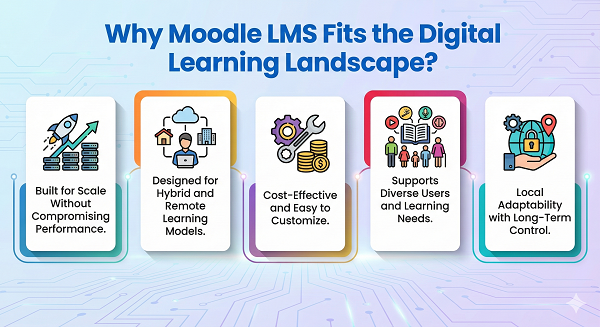
Built for Scale Without Compromising Performance
Moodle LMS supports learning at every level. It works for small classrooms and large enterprise programs alike. Organizations can start small and scale without changing platforms.
The system distributes user traffic across servers. This keeps learning smooth even during peak usage. When learner numbers increase, Moodle adjusts without slowing down. Users continue learning without interruptions.
To maintain stability, Moodle controls memory usage per session. This prevents one user from affecting others. As a result, uptime stays high and performance remains reliable.
Designed for Hybrid and Remote Learning Models
Hybrid work has reshaped training delivery. Teams now combine in-person sessions with online learning. Moodle LMS supports this mix naturally. Learners can access courses from any device. Trainers can update content anytime. Progress tracking remains clear across locations. This flexibility helps organizations maintain consistent learning outcomes.
For businesses with remote teams, Moodle LMS becomes a central learning hub. Everyone stays aligned, regardless of location.
Cost-Effective and Easy to Customize
Many organizations prefer long-term value platforms. Moodle LMS is open-source, which saves money on licensing and avoids vendor lock-in because it is free. Workflows, layouts, and features can be customized by organizations. Plugins can also be added to match learning goals. Branding options make the experience familiar and trustworthy.
This level of control allows Moodle LMS to support growth without forcing costly upgrades.
Supports Diverse Users and Learning Needs
Moodle LMS adapts to different industries, age groups, and learning styles. Organizations use it for education, employee training, certification, and skill programs. Course creators can add videos, quizzes, and interactive activities. Trainers can track progress and share feedback easily. Moodle LMS retains relevance across sectors because of this flexibility.
Local Adaptability with Long-Term Control
With Moodle LMS, organizations have ownership over their learning environment. Teams have control over data, content, and platform direction. This allows for long-term planning. Moodle adapts as learning needs change without forcing changes. In India’s digital learning future, Moodle LMS strikes the right balance between flexibility and stability.
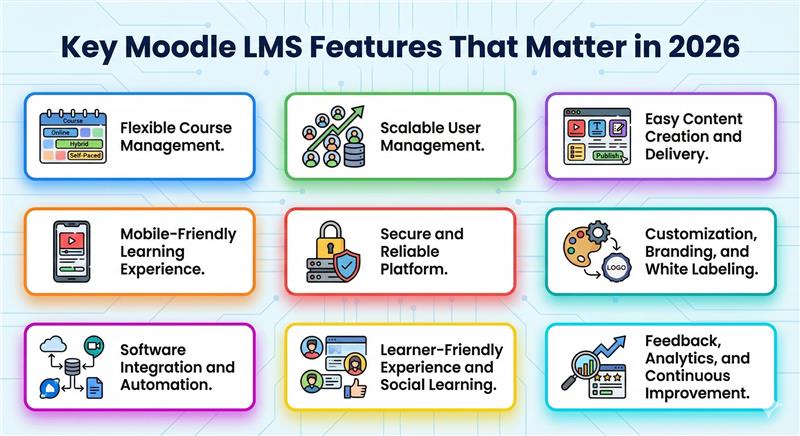
Key Moodle LMS Features That Matter in 2026
Now, learning platforms must provide more functionality for less money. In 2026, the Moodle LMS features that matter are flexibility, automation, engagement, and control. They should scale easily, remain secure, and remain simple for users. Indian organizations use these features to manage learning programs effectively without being overly complex or expensive.
Below is a deeper look at the Moodle LMS features that continue to drive adoption across education and business.
Flexible Course Management
Moodle LMS makes course creation easy and structured. Trainers can design courses, update content, and organize lessons without technical skills.
Courses support videos, documents, quizzes, and interactive activities. Learning paths guide users step by step, which improves completion rates. Content updates reflect instantly, keeping training relevant. This flexibility works well for academic courses, employee training, and certification programs.
Scalable User Management
Moodle LMS grows with your organization. It supports small teams and large user bases on the same platform. Administrators can manage learners, instructors, and roles from one place. Bulk enrollments, role-based access, and automated user actions reduce manual effort. As learning needs expand, the Moodle learning management system continues to perform without disruption.
Easy Content Creation and Delivery
Creating learning content should not feel complex. Moodle LMS offers drag-and-drop tools to organize slides, videos, audio files, and live sessions. Course creators can upload standard learning formats like SCORM and xAPI files with ease. This ensures compatibility with common authoring tools and smooth content delivery. Simple content management helps teams focus on learning quality, not platform limitations.
Mobile-Friendly Learning Experience
Modern learners expect access anywhere. Moodle LMS supports learning on mobile phones and tablets without losing functionality. Learners can join courses, complete assignments, and receive updates on the go. This mobile-first approach helps the growing base of remote and hybrid learners. Better access leads to higher engagement and improved learning outcomes.
Secure and Reliable Platform
Security remains a priority for organizations. Moodle LMS offers strong data protection and controlled access to learning content. Administrators can define permissions, manage visibility, and protect user data. Cloud-based setups boost uptime and handle traffic spikes better. This ensures stable performance during peak usage and builds long-term trust.
Customization, Branding, and White Labeling
Every organization has a unique identity. Moodle LMS allows full customization of themes, layouts, and colors. Organizations can apply branding elements like logos and custom URLs. White labeling removes platform references and creates a seamless brand experience. This helps learners feel connected to the organization, not just the platform.
Software Integration and Automation
Learners are slowed down by manual tasks. Moodle LMS integrates with existing business systems to automate processes. Single Sign-On simplifies access. It supports user creation, enrollment, and data sync. Learners receive automated notifications about course deadlines and deadlines. This reduces administrative workloads and improves learning consistency.
Learner-Friendly Experience and Social Learning
Moodle LMS focuses on simple navigation and clear layouts. Learners can explore optional courses, join discussions, and share knowledge through forums. Social learning tools improve engagement and encourage collaboration. This creates a learning culture rather than a one-way training system.
Feedback, Analytics, and Continuous Improvement
Over time, learning should improve. Moodle LMS includes surveys and reporting tools for collecting feedback. Organizations can track progress, measure performance, and identify gaps. Data-driven learning decisions improve outcomes for both learners and trainers. Insights help refine courses and align training with real needs.
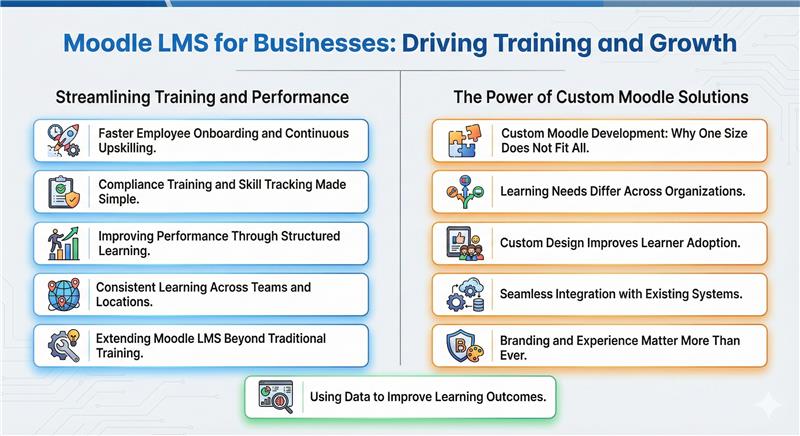
Moodle LMS for Businesses: Driving Training and Growth
Businesses today need learning systems that do more than deliver courses. They need platforms that improve performance, support growth, and keep teams aligned. This is where Moodle LMS for businesses proves its value. As companies scale operations and adopt hybrid work models, training must stay consistent and easy to manage. Moodle LMS helps businesses build structured learning programs that support employees at every stage.
Faster Employee Onboarding and Continuous Upskilling
A smooth onboarding process sets the tone for long-term success. With Moodle LMS, businesses can centralize onboarding content and deliver it in a clear, guided format. New hires can access training materials, assessments, and resources from day one. As roles evolve, the same platform supports ongoing upskilling. Employees learn at their own pace, without disrupting daily work. This reduces ramp-up time and improves early productivity.
Compliance Training and Skill Tracking Made Simple
Compliance and skill tracking are critical for growing businesses. Moodle LMS allows teams to assign mandatory training, set deadlines, and track completion in one place. Managers can monitor progress through reports and dashboards. This visibility helps organizations meet regulatory needs and identify skill gaps early. Clear tracking also supports audits and internal reviews without manual effort.
Improving Performance Through Structured Learning
Moodle LMS supports assessments, quizzes, and feedback tools that help measure learning impact. Employees receive timely feedback, which improves understanding and retention. Managers gain insights into performance trends and training outcomes. This data-driven approach helps businesses refine training strategies and improve results over time.
Consistent Learning Across Teams and Locations
Moodle LMS ensures consistent learning experiences for everyone. Teams access the same content, follow the same standards, and align with shared goals. Updates roll out instantly, so no one works with outdated information. This consistency strengthens knowledge sharing and supports unified business growth.
Extending Moodle LMS Beyond Traditional Training
Moodle LMS isn’t just for internal training for businesses. It supports product knowledge programs, partner education, and internal communities. Teams can share best practices through discussion forums, collaboration spaces, and shared resources. A learning culture is fostered as a result of this.
Custom Moodle Development: Why One Size Does Not Fit All
Each organization approaches learning differently. Training goals, user types, and systems vary greatly. As a result, ready-made LMS setups often fail to meet the needs of organizations. It is at this point that custom Moodle development becomes crucial. Standard platforms offer basic features. However, they seldom match real learning workflows. Moodle LMS can be tailored around an organization’s unique needs rather than fitting processes around it.
Learning Needs Differ Across Organizations
It is common for them to focus on employee onboarding, certifications, compliance, or academic programs. Moodle custom development enables organizations to create learning structures aligned with goals, users, and content types. Consequently, learning feels relevant and straightforward.
Custom Design Improves Learner Adoption
If a platform feels complex, learners disengage quickly. With custom Moodle development, teams can design layouts that feel simple and intuitive. Clear navigation, tailored dashboards, and role-based views improve usability. When learners feel comfortable, participation and completion rates improve.
Seamless Integration with Existing Systems
Multiple systems are already common in most organizations. Custom Moodle development can be integrated seamlessly with these tools. Data flows automatically between systems. Users’ records stay updated. Manual effort is reduced. This creates a connected learning environment that reduces errors and saves time.
Branding and Experience Matter More Than Ever
Organizations can create a familiar environment that builds trust and consistency by developing customized Moodle interfaces that reflect their identity. Generic interfaces often feel disconnected. A white labeled brand keeps the focus on your brand by removing platform references. Custom Moodle development supports branded themes, colors, and layouts.
Using Data to Improve Learning Outcomes
Providing organizations with customized reporting allows them to analyze performance at a deeper level. This allows for better decisions and continuous improvement. Learning data offers valuable insights. Custom reports can help track progress, measure impact, and identify gaps.
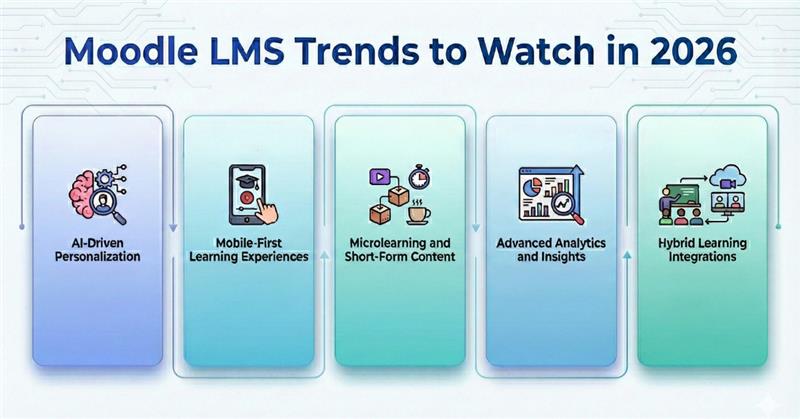
Moodle LMS Trends to Watch in 2026
Moodle continues to evolve with learning expectations and technology shifts. These trends keep the platform relevant, adaptive, and effective rather than static.
AI-Driven Personalization
Learning activity data, quiz results, and engagement patterns help guide learners through the right content in Moodle LMS. AI-powered tools suggest lessons, readings, and exercises based on progress. In this way, learners can move at their own pace while trainer workload is reduced.
Mobile-First Learning Experiences
Most learners now access courses on mobile devices. Moodle development focuses on faster load times, touch-friendly navigation, and offline access. This makes learning possible during travel or remote work and improves overall participation.
Microlearning and Short-Form Content
Modern Moodle themes support microlearning formats that improve retention and fit busy schedules. Short videos, quick quizzes, and focused lessons work better than long lectures.
Advanced Analytics and Insights
Having real-time visibility into training trends and early disengagement risks is essential for instructors. Moodle now features real-time dashboards that highlight performance trends and early disengagement risks.
Hybrid Learning Integrations
The application of blended learning is becoming increasingly common. Moodle supports hybrid setups through video tools, calendar syncing, attendance tracking, and classroom integrations. These features allow organizations to manage both online and in-person learning from one location.
Final Thoughts: Is Moodle LMS the Right Choice in 2026?
Moodle LMS continues to stand out for its flexibility and scalability. It supports education, training, and skill development without forcing rigid structures.
For different organizations, Moodle offers long-term control, cost efficiency, and adaptability. It grows with learning needs while staying simple to manage.
Choosing Moodle LMS in 2026 means investing in a platform that evolves with your organization rather than limiting it.
Why Choose IDS Logic for Moodle Development?
It takes the right expertise to create a strong platform. IDS Logic builds and scales Moodle solutions that solve real learning challenges. We begin by understanding your goals, then customize Moodle to fit your users, systems, and growth plans. From integrations and reporting to design and performance, we build solutions that last. For learners and administrators, we keep Moodle simple and powerful.
If you are planning custom Moodle development, enhancements, or long-term support, IDS Logic can help you move forward with clarity and confidence. Let’s build a Moodle platform that supports your learning strategy today and adapts for tomorrow.
Frequently Asked Questions
Q1. Can Moodle LMS support multilingual learning programs?
Moodle LMS supports multiple languages out of the box. Learners can switch languages easily from their profiles. Organizations can also customize language packs and course content for regional audiences. This makes Moodle suitable for teams spread across different regions and countries.
Q2. Is Moodle suitable for industry-specific training programs?
Moodle LMS works well across industries such as IT, healthcare, manufacturing, finance, and education. Organizations can customize courses, workflows, and assessments based on industry needs. Custom reports also help track skills, compliance, and certifications accurately.
Q3. How long does it take to launch a custom Moodle platform?
Timelines depend on complexity. A basic Moodle setup may take a few weeks. A fully customized platform with integrations, branding, and reporting may take longer. Clear planning and experienced Moodle developers help reduce delays and ensure smooth delivery.
Q4. Can Moodle LMS handle high user traffic during peak periods?
Definitely. Moodle LMS can handle high traffic when it is hosted and configured properly. Load balancing, caching, and scalable cloud infrastructure boost performance. This makes Moodle the perfect LMS for large enrollments, exams, and enterprise-wide training programs.
Q5. Does Moodle support accessibility standards?
Yes, Moodle supports inclusive learning. It is compatible with screen readers, keyboard navigation, and a variety of display setting options. Organizations can also design content that meets accessibility standards.
Q6. Can Moodle be upgraded without affecting existing content?
The upgrade process of Moodle can be carefully planned to ensure that course content, user data, and progress are protected. Testing updates in a staging environment enhances smooth upgrades with minimal downtime.