
Why Moodle LMS is Best for Personalized ELearning Experience?
The learning landscape has changed rapidly over the last few years. Today in 2026, organizations and educational institutes need flexible, engaging, and personalized digital learning experiences that can support remote, hybrid, and on-demand training models.
This is where Moodle LMS continues to stand out as one of the most trusted and widely used learning management systems globally. From employee training and onboarding to online education and skill development, Moodle LMS helps businesses and institutions create interactive and scalable eLearning environments with ease.

The growing demand for Moodle LMS development is driven by its flexibility, open-source architecture, cost-effectiveness, and customization capabilities. Organizations can create personalized learning paths, automate training workflows, track learner progress, and deliver courses across multiple devices without location barriers.
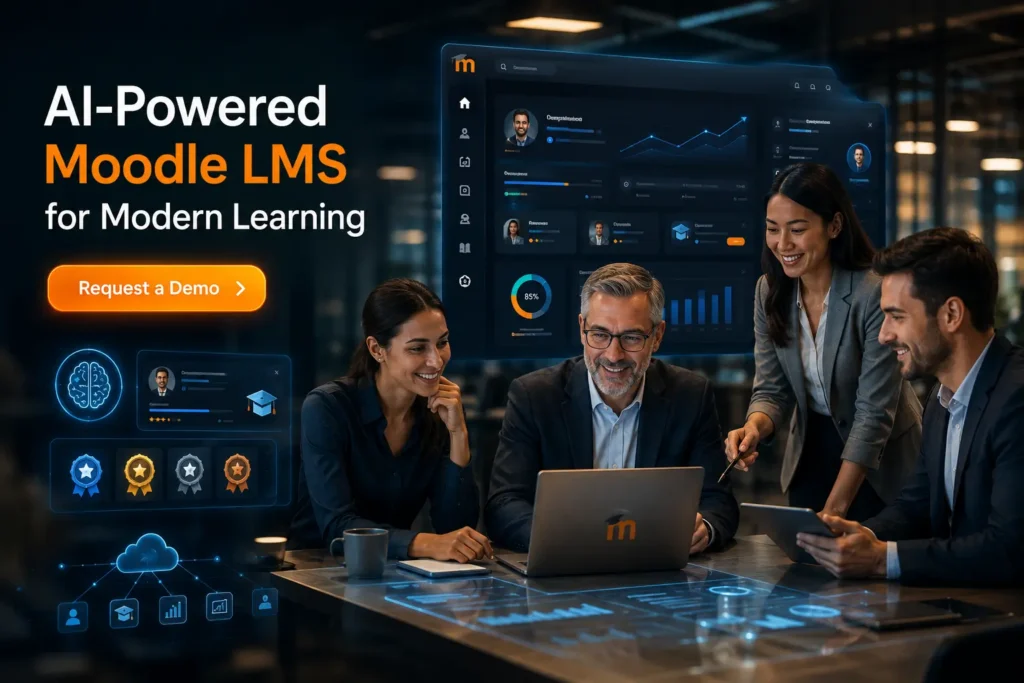
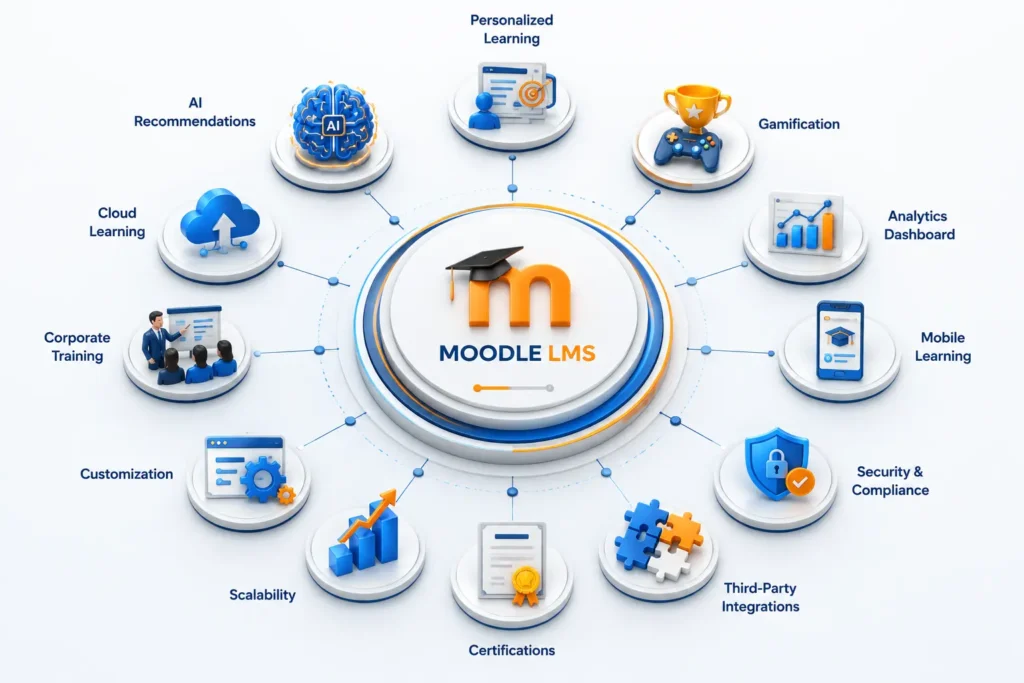
Moodle LMS solutions nowadays support AI-powered recommendations, gamification, mobile learning, analytics dashboards, certifications, and third-party integrations. These features help improve learner engagement while making training more efficient and accessible.
Another major advantage of Moodle LMS is its ability to adapt to different industries and learning requirements. Whether it is corporate training, higher education, healthcare learning, or employee onboarding, Moodle offers the scalability and flexibility needed for long-term growth. Additionally, Moodle integrates smoothly with virtual classrooms, HR systems, Microsoft 365 tools, and enterprise applications, helping organizations build a connected and secure digital learning ecosystem.
In this blog, we will explore why Moodle LMS remains one of the best platforms for delivering personalized eLearning experiences and how it helps organizations improve learner engagement, training efficiency, and overall productivity.
Explore the Latest Moodle LMS 5.2 Features and Updates
Planning to modernize your digital learning platform? Discover the newest Moodle LMS 5.2 features, AI enhancements, usability improvements, reporting capabilities, and performance updates that are helping organizations create smarter and more engaging eLearning environments in 2026.
Why is Moodle LMS the Best Choice for Personalized eLearning?
Moodle LMS continues to be one of the most trusted and widely used learning management systems across the world. From businesses and universities to training institutes and enterprises, organizations prefer Moodle because it offers flexibility, scalability, customization, and cost-effective learning management under one platform.
Unlike many conventional LMS platforms, Moodle adapts easily to different learning models and business goals. Whether it is employee training, compliance learning, academic education, partner onboarding, or skill development, Moodle LMS development helps organizations create personalized and engaging digital learning experiences without major limitations.
Below are some of the biggest reasons why Moodle LMS remains a preferred choice for modern eLearning:
Advanced Customization
One of the strongest advantages of Moodle LMS is its extensive customization capability. Since Moodle is an open-source LMS platform, organizations can modify features, themes, dashboards, workflows, reports, and learning paths according to their exact requirements.
Moodle LMS customization solutions now support thousands of plugins, integrations, and AI-powered enhancements that help businesses create fully personalized learning environments. From gamified learning and certification systems to multilingual training modules and role-based access, Moodle allows organizations to build training platforms that reflect their own workflows instead of forcing teams to adjust to rigid systems. This flexibility makes Moodle highly suitable for industries like healthcare, retail, IT, finance, education, manufacturing, and corporate training.
Cost-Effective and Scalable Learning Platform
Another major reason behind Moodle’s growing popularity is its affordability. Unlike many commercial LMS platforms that charge expensive licensing fees, Moodle offers a much more cost-effective approach for organizations planning long-term digital learning strategies.
Businesses can scale courses, learners, departments, and training programs without constantly worrying about rising subscription costs. Even after adding customization, Moodle hosting, support, and integrations, Moodle LMS often delivers a lower total cost compared to many proprietary learning platforms. At the same time, Moodle offers excellent scalability. Whether you want to train a small team or manage learning for thousands of users globally, Moodle can easily handle growing learner volumes without affecting performance.
Excellent Reliability and Continuous Improvements
Moodle has built a strong reputation as a reliable and future-ready learning management system. The platform continues to evolve with regular updates, security enhancements, performance improvements, and modern learning features.
Today, Moodle LMS supports AI-powered course recommendations, automated content suggestions, predictive learning analytics, mobile learning, and intelligent reporting systems. These updates help organizations improve learner engagement while simplifying training administration.
Its stable architecture and long-term reliability make Moodle a dependable solution for businesses that want a secure and scalable learning platform for future growth.
Advanced Analytics and Learner Tracking
Today organizations rely heavily on data-driven training strategies, and Moodle LMS supports this through powerful analytics and reporting tools.
Administrators and trainers can monitor learner progress, course completion rates, engagement levels, assessment scores, certifications, and learning performance through real-time dashboards. Predictive analytics also help identify learners who may need additional support before they disengage completely.
These reporting capabilities help businesses improve learning outcomes, measure training effectiveness, and make better decisions regarding employee development programs.
Build a Scalable Digital Learning Platform for 2026
Modern learning platforms need more than basic course management. Learn how scalable Moodle LMS solutions help businesses and educational institutes deliver personalized learning, improve learner engagement, and support long-term digital transformation goals.
Strong Community Support and Plugin Ecosystem
One of Moodle’s biggest strengths is its large global community. Thousands of developers, educators, LMS consultants, and Moodle experts continuously contribute to improving the platform. This strong ecosystem ensures regular innovation, faster problem-solving, extensive documentation, and access to a massive plugin marketplace. Organizations can easily find solutions, integrations, and feature extensions without building everything from scratch.
Because of this active community support, Moodle continues to remain updated with changing learning trends, compliance requirements, and modern digital education standards.
Top-Notch Security and Compliance
As online learning platforms handle sensitive learner information, certifications, assessments, and internal business data, security has become a major priority for organizations. Moodle LMS offers powerful security features including user authentication, role-based access controls, encrypted communication, regular security patches, GDPR-friendly controls, and compliance-focused configurations.
Organizations can also choose secure cloud hosting or self-hosted environments depending on their compliance and infrastructure needs. These features help businesses create a safe and reliable digital learning ecosystem for learners and administrators alike.
Gamification Improves Learner Engagement
Gamification continues to play a huge role in improving learner participation and course completion rates. Moodle LMS includes advanced gamification features such as badges, rewards, leaderboards, points, quizzes, certificates, and achievement tracking.
These features make learning more interactive, engaging, and enjoyable. Instead of feeling repetitive or boring, training becomes more motivating for learners across all age groups and industries. Research in recent years has also shown that gamified learning environments help improve retention, participation, and long-term learning outcomes significantly.
Smooth Integrations With Business Applications
Modern digital learning environments require smooth integration with business tools and enterprise systems. Moodle LMS supports integrations with Microsoft Teams, Zoom, Google Workspace, HR software, CRM systems, payment gateways, virtual classrooms, and various third-party applications.
These integrations help organizations centralize learning, communication, reporting, and collaboration within one connected ecosystem. This reduces manual work while improving overall operational efficiency.
Tips to Create a Powerful LMS for Healthcare Businesses
Healthcare organizations require secure, scalable, and compliance-focused learning platforms. Explore practical tips to build a powerful healthcare LMS that improves staff training, compliance management, certifications, and remote learning experiences.
Mobile Learning and Accessibility
Today’s learners expect training content to be accessible anytime and anywhere. Moodle LMS supports fully responsive learning experiences across desktops, tablets, and smartphones. The Moodle mobile app allows learners to access courses, attend virtual sessions, complete assignments, receive notifications, and track progress even while on the move. Offline learning support also helps users continue training without constant internet connectivity. This flexibility is extremely valuable for remote teams, hybrid workplaces, field employees, and modern educational institutions.
Flexible Hosting and Long-Term Support
Moodle LMS offers flexible hosting options based on business requirements and budgets. Organizations can choose managed Moodle hosting, cloud-based LMS deployment, or self-hosted infrastructure depending on their scalability and compliance needs.
Additionally, businesses can partner with experienced Moodle LMS development companies for ongoing support, updates, maintenance, performance optimization, and feature enhancements. This ensures long-term platform stability and smooth learning operations.

Conclusion
Moodle LMS has successfully evolved from a simple learning management platform into a complete digital learning ecosystem that supports modern training and education needs. Its flexibility, scalability, strong security, AI-powered capabilities, and advanced customization options make it one of the most reliable choices for businesses, educational institutes, and enterprises looking to deliver personalized eLearning experiences.
As organizations continue to adopt hybrid learning, remote training, and skill-based education models, Moodle LMS provides the tools needed to create engaging, accessible, and learner-focused training environments. From gamification and mobile learning to analytics, automation, and seamless integrations, Moodle helps organizations improve learner engagement while simplifying training management.
Another major advantage of Moodle LMS is its open-source architecture, which gives organizations complete freedom to customize the platform according to their operational goals and learner requirements. Whether you need employee training, compliance management, customer education, academic learning, or certification programs, Moodle LMS offers the flexibility to scale and adapt as your learning needs grow.
However, the real success of a Moodle LMS platform depends on how well it is planned, customized, implemented, and optimized. A properly developed Moodle solution can improve learning outcomes, reduce administrative workload, and create a more connected digital learning experience for users.
For organizations planning to invest in long-term digital learning strategies, Moodle LMS continues to stand out as a cost-effective, future-ready, and highly adaptable eLearning solution that delivers measurable business and educational value.
Create Powerful eLearning Experiences With IDS Logic
At IDS Logic, we help organizations build scalable, secure, and personalized Moodle LMS solutions tailored to their unique training and learning requirements. From Moodle LMS development and customization to integrations, migration, support, and maintenance, our experts deliver end-to-end solutions that improve learner engagement and training efficiency.
Whether you are an educational institute, corporate business, healthcare provider, or enterprise organization, we can help you develop a future-ready Moodle LMS platform aligned with your goals.
Frequently Asked Questions
Q) Why is Moodle LMS still highly popular in 2026?
Moodle LMS continues to remain highly popular in 2026 because of its flexibility, scalability, and cost-effective learning environment. Organizations prefer Moodle because it supports personalized learning, AI-powered features, mobile accessibility, and seamless third-party integrations. Its open-source architecture also allows businesses and educational institutes to customize the platform according to their exact training needs without paying heavy licensing fees.
Q) Can Moodle LMS support personalized learning experiences?
Moodle LMS is well-known for supporting highly personalized learning experiences. Organizations can create custom learning paths, adaptive courses, learner-specific dashboards, role-based access, and automated recommendations. Learners can study at their own pace while accessing content relevant to their skills, progress, and training goals. This makes learning more engaging, structured, and effective.
Q) Is Moodle LMS suitable for corporate employee training?
Moodle LMS is widely used by businesses for employee onboarding, compliance training, sales enablement, leadership programs, partner training, and customer education. It helps companies manage large-scale training programs while tracking learner performance through advanced reporting and analytics tools. Its flexibility also allows organizations to update training content quickly as business requirements change.
Q) Does Moodle LMS support mobile learning?
Moodle LMS offers a fully mobile-friendly learning experience through responsive web design and dedicated mobile applications. Learners can access courses, assignments, quizzes, and training materials from smartphones, tablets, or desktops anytime and anywhere. Moodle also supports offline learning capabilities, which is extremely useful for users with limited internet access.
Q) How secure is Moodle LMS for enterprise use?
Moodle LMS includes strong security features that help organizations protect sensitive learner and business data. It supports secure authentication, role-based permissions, encrypted communication, regular security updates, and GDPR-friendly controls. Organizations can also implement additional enterprise-grade security measures depending on their compliance and operational requirements.
Q) Can Moodle LMS integrate with third-party business tools?
Moodle LMS integrates smoothly with a wide range of third-party tools and enterprise applications. It can connect with Microsoft Teams, Zoom, CRMs, HRMS platforms, payment gateways, analytics tools, and cloud-based systems. These integrations help organizations automate workflows, simplify learner management, and create a connected digital learning ecosystem.
Q) Does Moodle LMS support AI and automation features?
Moodle LMS platforms today include AI-powered and automation-based capabilities that improve both learning and administration. Organizations can use AI-assisted course recommendations, automated grading, smart reporting, predictive analytics, chatbots, and workflow automation features.
Q) Is Moodle LMS cost-effective compared to other LMS platforms?
Moodle LMS is considered one of the most cost-effective learning management systems available today. Since it is open source, organizations do not have to pay expensive licensing fees. Businesses can invest only in the features, hosting, support, and customization services they actually need, which helps reduce overall LMS ownership costs significantly.
Q) Which industries commonly use Moodle LMS?
Moodle LMS is widely used across industries including education, healthcare, IT, manufacturing, retail, finance, government, and corporate training sectors. Its flexibility allows organizations from different industries to build customized learning environments based on their training goals, workforce structure, and compliance requirements.