
How ChatGPT Can Help Your Ecommerce Business? 7 Use Cases Illustrated!
ChatGPT is one of the hottest technologies shaping today’s digital landscape. In 2025, it is not just in the news, it is actively transforming industries. For ecommerce entrepreneurs, the real question is no longer “What is ChatGPT?” but “How can ChatGPT boost my online store?” This blog will walk you through that, with real ChatGPT e-commerce use cases explained in simple terms.
The ecommerce race is tougher than ever. Global ecommerce sales are projected to surpass USD 6.5 trillion by 2025, with India becoming one of the fastest-growing markets. That means customer acquisition is harder, competition is sharper, and expectations are higher. To stand out, your store must be modern, fast, and smart enough to meet customer demands.
This is where ChatGPT steps in. Developed by OpenAI, ChatGPT goes far beyond a regular chatbot. It generates human-like responses, solves queries in real-time, and handles multiple tasks with ease, be it writing product descriptions, offering personalized recommendations, or assisting in retail forecasting. In fact, many ChatGPT use cases in retail are already helping businesses improve customer service, cut costs, and scale faster.
For ecommerce owners, the opportunity is clear. ChatGPT for e-commerce is no longer a future idea, it is today’s competitive edge. Almost every retailer is exploring ChatGPT retail use cases to save time and boost growth. If you are serious about taking your ecommerce store to the next level, adopting ChatGPT should not be delayed any further.
In this post, we will explain seven powerful ways you can use ChatGPT to drive sales, improve customer experiences, and stay ahead in the fast-moving ecommerce world. Let’s dive in!
Why ChatGPT Stands Out for E-commerce Businesses?
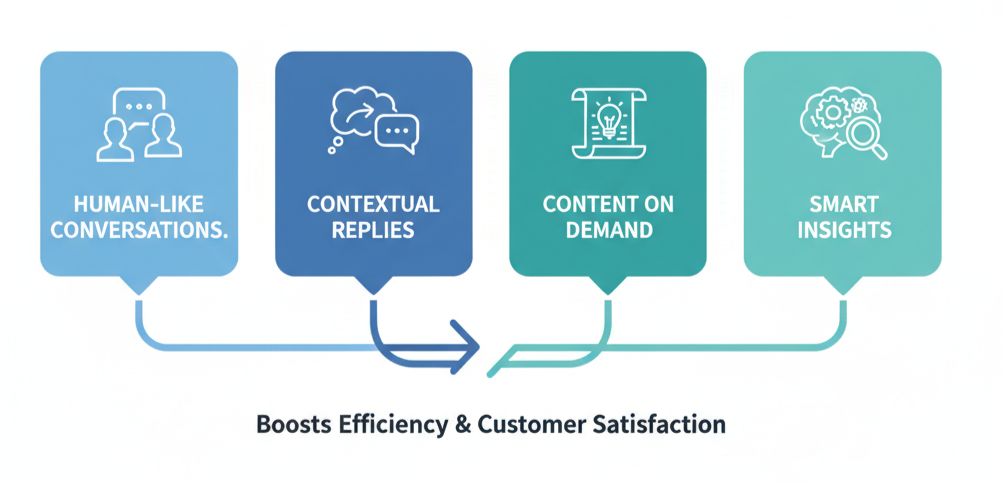
Before we get into the detailed use cases, let’s look at what makes ChatGPT such a strong partner for online retail. Unlike basic bots, it does far more than scripted replies. Here are the capabilities that give ChatGPT for e-commerce its edge:
Human-like conversations
ChatGPT understands and generates natural text, so your customers feel like they’re talking to a real person.
Contextual replies
It remembers the flow of the conversation, offering relevant answers that make interactions smoother and smarter.
Content on demand
From product descriptions to SEO blogs, ChatGPT can create content quickly, keeping your store fresh and consistent.
Smart insights
Beyond chat, it can scan reviews, feedback, and social media to highlight what your customers love, or where they struggle.
These features are the reason many businesses now use ChatGPT e-commerce use cases to streamline operations and improve customer satisfaction.
What Makes ChatGPT a Game-Changer in Retail?
2025 marks a big leap with ChatGPT-5, and it’s not just hype. The model has introduced features that bring real value to ecommerce and retail businesses.
Smarter reasoning for real results
ChatGPT uses a unified router system that automatically adjusts between quick answers and deep analysis. This means faster support for simple queries and sharper insights for complex tasks like pricing or forecasting.
Proven accuracy
In 2025, ChatGPT-5 became the first AI to score 100% in the AIME math competition and outperformed earlier models in scientific reasoning. For retailers, this translates into more reliable demand predictions, accurate inventory planning, and stronger decision-making.
Business-ready precision
Whether it’s financial forecasting, customer trend analysis, or retail planning, the new model brings clarity and confidence that earlier versions couldn’t match.
For e-commerce owners, this evolution means adopting ChatGPT retail use cases is no longer experimental, it’s a proven way to optimize operations and gain a competitive advantage.
7 ChatGPT Use Cases for E-commerce Businesses
Adopting ChatGPT in your online store is no longer optional, it’s a strategic move to stay competitive. With global e-commerce sales expected to cross USD 6.5 trillion in 2025, brands that embrace automation and personalization will lead the race. ChatGPT for e-commerce can streamline workflows, lower costs, and enhance customer satisfaction. Let’s explore seven detailed ChatGPT e-commerce use cases that can transform how your store operates.
1. Creating Compelling Product Descriptions
Shoppers today don’t have the patience for long-winded or repetitive product copy. They want crisp, clear, and benefit-driven descriptions. ChatGPT can generate SEO-friendly, engaging content that highlights key product features and addresses customer pain points.
For instance, instead of writing “Blue Cotton Shirt – Comfortable and Stylish,” ChatGPT can craft something like: “A breathable cotton shirt designed for all-day comfort, perfect for work or weekend wear.” Such content feels more personal, boosts search visibility, and improves conversion rates. This is one of the most common ChatGPT e-commerce use cases seen on platforms like Shopify and WooCommerce.
2. Personalized Shopping Recommendations
Confusing navigation or too many choices can overwhelm buyers. ChatGPT can solve this by offering personalized product suggestions based on browsing history, cart activity, or purchase trends. By combining natural language with customer data, it acts like a virtual shopping assistant.
For example, if a shopper buys a pair of running shoes, ChatGPT can recommend matching sportswear or accessories. Retailers using such ChatGPT retail use cases report higher average order values and stronger repeat sales because the suggestions feel relevant, not forced.
3. Smarter Email Campaigns That Connect
Generic email blasts are often ignored, but personalized ones still convert. ChatGPT can generate tailored email campaigns that address customer preferences, past orders, or even abandoned carts.
Imagine sending a cart recovery email that reads: “Still thinking about that Bluetooth speaker? Here’s 10% off to make your decision easier.” Such personal touches improve open rates and drive higher conversions. In fact, study and research revealed that personalized emails deliver 122% ROI, making this one of the most effective ChatGPT use cases in retail marketing.
4. Instant Customer Support, 24/7
Customer service remains a make-or-break factor for e-commerce. Shoppers expect real-time answers to questions like “Where is my order?” or “How do I return this?” ChatGPT can handle FAQs, process-related queries, and troubleshooting instantly, reducing wait times and freeing up human agents for complex cases.
Integrating ChatGPT into customer service not only cuts costs but also improves satisfaction. A Deloitte survey showed that 68% of consumers are more likely to return to stores that provide quick and reliable support. No wonder ChatGPT for e-commerce customer support is becoming a must-have.
5. Social Media Content That Stays Fresh
Consistency on social media is tough for growing e-commerce businesses. ChatGPT can help by drafting creative captions, hashtags, and even ad copy for campaigns. It ensures that your brand voice stays consistent while reducing the burden on marketing teams.
For example, instead of posting a dull “New arrivals now live,” ChatGPT can generate something engaging like: “Fresh styles just dropped! Shop the collection before it sells out.” Many small and mid-sized retailers in India now rely on ChatGPT e-commerce use cases for social media to stay visible in a crowded digital market.
6. Unlocking Customer Insights from Data
Customer reviews, feedback, and social chatter often contain valuable insights, but going through them manually is time-consuming. ChatGPT can analyze this data to identify trends, recurring complaints, or popular features.
For example, if multiple reviews mention that a product is “great but sizing runs small,” the system can flag it to your team. These ChatGPT retail use cases help businesses adjust products, improve descriptions, and refine marketing strategies. By converting feedback into actionable insights, retailers make better decisions.
7. Streamlined Order Tracking and Post-Sale Support
The buying journey doesn’t end at checkout. Customers want constant updates on shipping, delivery, and returns. ChatGPT can provide instant answers to “Where is my package?” or guide customers through return policies without human intervention.
This not only builds trust but also improves loyalty. In 2025, businesses offering smooth post-purchase communication experience 30% higher repeat sales. By adopting ChatGPT for e-commerce order management, you ensure customers feel valued even after the purchase is complete.
ChatGPT in Action: Strengths and Shortcomings
ChatGPT is not just another chatbot. It is a smart conversational tool powered by artificial intelligence that can create essays, solve problems, generate outlines, prepare interview questions, or even draft research papers. Because of its versatility, it has quickly found a place in workplaces, schools, and creative industries. But like every tool, it has both strengths and weaknesses.
Let’s explore the key benefits first.
1. Learns and Improves Over Time
ChatGPT can sharpen its answers based on past conversations. Every interaction helps it give more refined replies later. Unlike static systems, it evolves continuously.
2. Speaks Multiple Languages
With its multilingual abilities, ChatGPT can talk to users across the globe. Businesses don’t need to worry about language barriers while supporting customers in different regions.
3. Always Available
ChatGPT works 24/7 without breaks, unlike human workers who need rest. This makes it a reliable support system for customers at any hour.
4. Boosts Customer Experience
Fast replies, multilingual support, and round-the-clock service together lead to happier customers. Many businesses use it to maintain higher satisfaction levels.
5. Understands Natural Language
ChatGPT doesn’t just answer in short robotic text. It processes natural human requests and responds in a conversational way, making interactions smoother and more relatable.
6. Saves Time and Increases Productivity
From drafting content to summarising reports, ChatGPT helps professionals finish tasks faster. This frees up human workers to focus on creative and strategic work.
7. Versatile Across Use Cases
It can write blogs, assist in coding, brainstorm ideas, provide study help, or generate a project scope. This wide range of use cases makes it more powerful than typical chatbots.
Drawbacks
Now, let us see the other side of the coin, its drawbacks.
Struggles With Human Emotions
ChatGPT doesn’t understand feelings like empathy or humour. If a user’s query is deeply emotional, it may misinterpret the intent.
Risk of Wrong Information
Since it learns from vast amounts of data, it may also deliver biased, outdated, or factually incorrect content. It cannot always separate right from wrong.
Requires Human Review
Even though it generates text quickly, the style and tone often need editing. Businesses still need people to review, refine, and make it sound truly “human.”
ChatGPT is a powerful tool, but not flawless. It shines in speed, availability, and versatility, but it should always be paired with human oversight.
The Other Side of AI: Roadblocks in Ecommerce
Artificial intelligence is revolutionising online shopping. From product recommendations to fraud detection, it is shaping the future of ecommerce. But businesses adopting AI also face several hurdles. Let’s look at them.
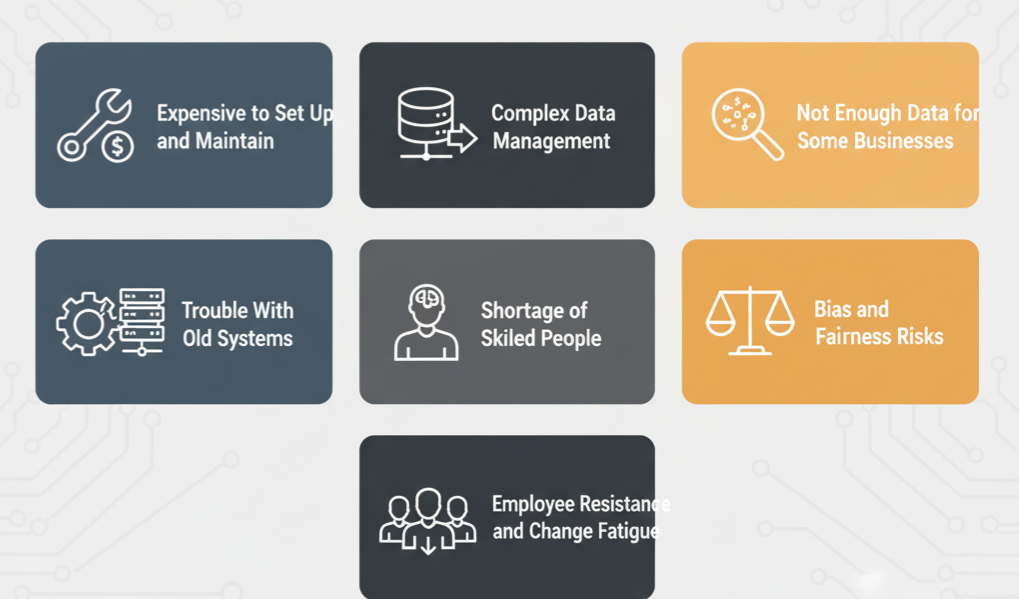
1. Expensive to Set Up and Maintain
Launching AI solutions means spending heavily on tools, skilled people, and data systems. For smaller companies, these costs can feel overwhelming.
2. Complex Data Management
Ecommerce data is scattered across CRMs, ERPs, websites, and marketing systems. Bringing it all together for AI use is not easy. Clean, accurate data is essential, but building that foundation takes effort.
3. Not Enough Data for Some Businesses
AI systems often perform better with large amounts of data. Newer or smaller stores may not have enough, which limits accuracy in predictions or recommendations.
4. Trouble With Old Systems
Many retailers still run on outdated ecommerce platforms. These systems are not built for AI, so upgrades or heavy customisation are needed before AI tools can work properly.
5. Shortage of Skilled People
AI adoption requires more than a single data scientist. Teams need experts in data handling, machine learning, ethics, and strategy. Finding and retaining such talent is difficult and costly.
6. Bias and Fairness Risks
If the data is biased, the AI will reflect it. This can cause unfair pricing, inaccurate recommendations, or discrimination. Fixing bias requires careful testing and strong ethical practices.
7. Employee Resistance and Change Fatigue
AI often changes how employees work. Some may worry about job security or feel uncomfortable with new tools. Companies need strong training and clear communication to make the transition smooth.
Wrapping It Up: Why ChatGPT Matters for the Future of E-commerce Business
ChatGPT has quickly grown from being just another chatbot to a powerful digital assistant that can write, solve problems, explain, and even plan. For ecommerce businesses, it offers practical help, like analysing customer feedback, writing product descriptions, or guiding buyers with personalised suggestions.
The bigger picture is this: ChatGPT is changing how businesses work. They bring speed, creativity, and efficiency, but they also come with responsibilities. You need to manage costs, keep data clean, avoid bias, and balance automation with human oversight.
The release of ChatGPT-5 in August 2025 shows just how fast AI is evolving. With massive leaps in accuracy, context memory, and “software on demand” features, this new version is no longer just an experiment. It’s a business engine. For small and mid-sized companies, that means access to tools that were once reserved for large corporations.
The winners will be the businesses that don’t see AI as a threat, but as a partner. ChatGPT will not replace people, but it will help ambitious entrepreneurs outperform competitors, serve customers better, and scale faster. The real question is no longer if you should adopt AI, but how soon.
The AI revolution is already here. Businesses that act now, especially in ecommerce, will lead tomorrow.
Frequently Asked Questions
Q1. How can ChatGPT improve online store conversions?
Unlike older tools, ChatGPT-5 can personalise customer journeys at scale. It can answer product questions instantly, recommend items based on browsing patterns, and guide shoppers through checkout. Together, these small actions can drive 30-40% higher conversion rates for ecommerce stores.
Q2. Can ChatGPT help with reducing cart abandonment?
Yes. One of the biggest struggles in ecommerce is unfinished purchases. ChatGPT can act as a real-time shopping assistant, reminding customers about items in their cart, offering support with payment issues, or suggesting alternatives when a product is out of stock. This leads to more completed orders.
Q3. How does ChatGPT support content creation for ecommerce?
From product descriptions to SEO blogs, ChatGPT can produce high-quality content faster than traditional methods. Its expanded memory means it can follow long instructions, maintain consistent brand tone, and even optimize for search engines, all in one go.
Q4. Is ChatGPT useful for small ecommerce shops or only big brands?
It’s not just for enterprise-level businesses. With its improved efficiency, small shops can use ChatGPT for customer support, email campaigns, social media posts, and product recommendations, tasks that would otherwise require hiring a team. This levels the playing field.
Q5. What new opportunities does ChatGPT-5 open for ecommerce in 2025?
Beyond customer service and content, ChatGPT-5 enables “software on demand.” That means ecommerce owners can build small apps, automate workflows, or test new marketing strategies without coding knowledge. This flexibility helps stores stay agile and innovate quickly in a competitive market.