
How to Increase User Adoption of Your SharePoint Intranet?
When a SharePoint intranet goes live in an organization, it is expected to do more than just sit in the background. It should support business processes, help employees with their daily tasks, improve collaboration, and act as a hub for corporate culture. In short, its value depends on how well people actually use it.
Yet, many organisations discover that intranet adoption does not happen as smoothly as planned. Even after months of effort in planning and development, employees often show little interest in the new system. This gap between effort and usage is what makes SharePoint user adoption such a critical challenge.
The truth is, this is not a new problem. SharePoint has changed a lot over the years – moving from its earlier, more rigid on-premises version to the modern, cloud-driven, and flexible platform we know today. Despite this evolution, the question of how to increase intranet adoption is still very relevant in 2025. With organisations continuing to migrate from file shares and older tools into Microsoft 365 and SharePoint, getting employees to embrace the platform remains a priority.
High SharePoint user adoption is not only about numbers. It’s about how employees use the intranet: whether they rely on it to find information, complete workflows, and connect with colleagues. Strong adoption leads to better communication reach, productivity gains, and higher trust in the system. On the other hand, poor adoption signals deeper issues and often results in the intranet being overlooked altogether.
There is no single formula or quick trick to improve adoption. Instead, building a successful SharePoint user adoption strategy means addressing multiple factors such as governance, usability, training, and communication. In this blog, we will explore practical ways to increase adoption and ensure your intranet becomes a tool that employees value and use every day.
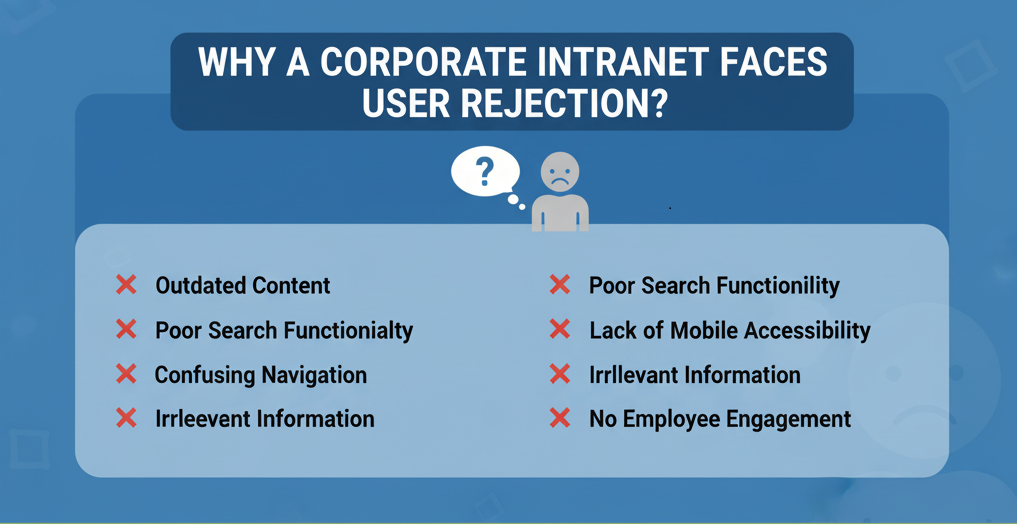
Why a Corporate Intranet Faces User Rejection?
If intranet adoption in your organisation is low, it usually points to deeper problems such as poor user experience, lack of relevant content, or unclear value. Adoption is not just about the number of logins—it is about how employees use the intranet to create real value. Strong SharePoint user adoption means more visits, active use of features, meaningful engagement with content, and contributions from employees. On the other hand, weak adoption can signal that staff are disconnected or frustrated.
One common reason for rejection is habit. Employees who have long relied on tools like email or messaging apps often resist moving to a new platform. They see it as an interruption to their normal working style. Another barrier is interest. If employees don’t see why learning a new system matters, they won’t invest time in it. Finally, if they fail to understand how a SharePoint intranet actually helps them—whether by saving time, improving communication, or streamlining tasks—the chances of adoption fall even further.
Research shows that up to 75% of employees disengage when intranets underperform. When people avoid the intranet, they go back to old habits like relying only on email, which reduces efficiency and limits collaboration. This is why intranet user adoption is so important. The higher the adoption, the greater the value—better communication reach, smoother processes, and improved productivity. Conversely, if employees don’t take the system seriously, it becomes an unused tool rather than a core part of the workplace.
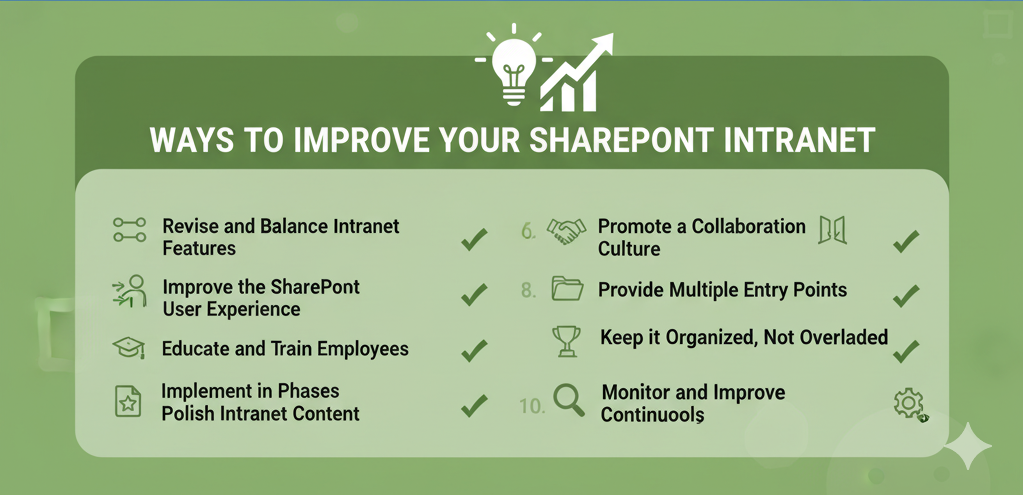
Ways to Improve Your SharePoint Intranet
Strong SharePoint intranet adoption doesn’t happen overnight. Employees need to see real value before they use it daily. The good news is, there are many ways to improve usage and build loyalty over time. Let’s walk through some practical strategies that can help.
Revise and Balance Intranet Features
Your SharePoint intranet should always strike the right balance between features and usability. Employees want tools that make daily tasks faster and easier, not more complicated. If the intranet is overloaded with functions no one asked for, or missing basic features people need—it will not win users over. Review your setup regularly, remove the noise, and add only the features that support everyday work.
Improve the SharePoint User Experience
A clunky or slow intranet is the fastest way to kill adoption. Focus on three core areas:
- SharePoint UI: Use modern, clean layouts that follow web design trends. A sleek design makes people want to use it.
- Response Time: Nobody likes waiting. Test page speed, server performance, and network connections to keep loading smooth.
- Adaptability: Today’s employees often work remotely. Make sure your intranet is mobile-friendly, with easy access on tablets and phones.
Educate and Train Employees
Employee education is key to SharePoint user adoption. Often, hesitation comes from past bad experiences with outdated versions. Run simple demos that show how modern SharePoint is different—cleaner, smarter, and more capable. After that, provide short, focused training. It doesn’t need to be long or technical; just enough so people know how to get things done.
Implement in Phases
Rolling out everything at once can overwhelm users. A phased approach works best. Start small, maybe with document migration—then move to Teams, intranet sites, workflows, and more. This step-by-step rollout gives employees time to adjust while building confidence in the system.
Polish Intranet Content
Content is at the heart of SharePoint intranet adoption. Keep it relevant, easy to read, and updated often. Encourage employees to contribute articles, guides, or updates. Outdated or stale content quickly erodes trust, so make content governance part of your routine.
Promote a Collaboration Culture
A SharePoint intranet works best when paired with a culture of sharing and teamwork. Invite employees to give feedback, ask questions, and share their experiences. Identifying SharePoint champions—those who enjoy new tools and can guide others—creates peer-to-peer support that boosts adoption.
Provide Multiple Entry Points
Not everyone loves navigating SharePoint directly. That’s fine. Use Teams integration or even synced folders in Windows Explorer to give employees different ways to reach SharePoint content. The easier it is to access, the more likely they are to use it.
Keep it Organized, Not Overloaded
One of the biggest mistakes is recreating the same “mess” of duplicate files and clutter that existed before. Clean up old documents, separate archives from active files, and avoid unnecessary site sprawl. A well-organised intranet builds trust and reduces frustration.
Lead by Example
Adoption grows when leadership uses the intranet first. If IT, HR, or department heads share updates and resources through SharePoint, others will follow. Demonstrating value is more powerful than just telling employees to use it.
Monitor and Improve Continuously
Intranet adoption is not a one-time goal, it’s an ongoing journey. Keep listening to employee feedback, track usage data, and stay on top of Microsoft updates. Small, regular improvements show employees that the intranet keeps evolving, which encourages them to keep engaging.
Why Engagement and Intranet Adoption Matter?
When it comes to your SharePoint intranet, engagement and adoption go hand in hand. An intranet that employees actually use is more than just a tool, it’s a driver of workplace culture and productivity. On the flip side, poor intranet adoption often means wasted investment and disengaged staff.
Engaged employees bring real benefits to the organisation. They are more motivated, more productive, and less likely to leave. Studies show that nearly 30% of employees feel undervalued or underappreciated, which often leads to high turnover. A well-designed and well-used SharePoint intranet can directly tackle this by creating a platform where employees feel informed, connected, and supported.
But here’s the catch: without strong SharePoint user adoption, even the most advanced intranet will fail to deliver. If the system feels clunky, hard to use, or disconnected from daily workflows, employees will avoid it. And without active users, there is no return on investment, just another unused platform gathering dust.
So, how do you bridge the gap? The answer lies in combining engagement with adoption. Integration with work-critical apps is one step. When employees find Teams, Outlook, project management tools, and documents all in one place, they naturally gravitate to the intranet. Adding collaboration spaces, feedback channels, and recognition features also helps build trust and participation.
Why Training Drives Better SharePoint Engagement?
Even the best intranet needs a little guidance. Regular training sessions, quick demos, and simple presentations of new features help employees see the true value of the platform. Training reduces resistance, clears up confusion, and positions the intranet as a tool that makes their workday easier—not harder.
When employees understand how the intranet supports their role, they are far more likely to use it. Training also prevents psychological rejection, where employees see the system as an obstacle instead of a benefit. By showing them exactly how the intranet improves their day-to-day tasks, you make adoption feel natural.
In short, successful intranet user adoption is not just about adding technology. It’s about creating engagement, educating employees, and making sure the intranet becomes a trusted part of their work routine.
Final Thoughts – Why IDS Logic Can Help You Win at Intranet Adoption
Building strong SharePoint user adoption takes more than just launching a portal. It requires continuous effort, listening to users, improving usability, rolling out in phases, training, and keeping content fresh. When you bring these pieces together, your intranet adoption grows steadily and becomes a part of daily work life.
That’s where choosing the right partner matters. IDS Logic, a trusted SharePoint development company, offers deep experience in designing, building, and supporting intranet solutions that people actually want to use.
Here’s how IDS Logic can make your adoption journey smoother:
- Full-cycle SharePoint services—from planning and design to deployment, migration, customization, and maintenance.
- Experts who focus on helping usability, speed, and feature relevance, so your users don’t resist, but embrace the intranet.
- Training, support, and governance built in, so you don’t launch once and leave the system to fall off.
If you feel your SharePoint intranet isn’t being used the way you hoped, or if you want to accelerate your intranet user adoption strategy, talking with a partner like IDS Logic could make all the difference.
Frequently Asked Questions
Q1. Can accessibility improvements help boost adoption?
Yes. Ensuring your intranet is accessible (for example, meeting WCAG standards) helps all users – including those with impairments – use it comfortably. Accessible design (font size, color contrast, keyboard navigation) makes people more confident, which drives adoption.
Q2. What is the role of performance monitoring (beyond usage stats) in maintaining adoption?
Monitoring performance – like page load speeds, server response, error rates, ensures things feel smooth. If pages are slow or broken, users abandon features. Combining usage analytics with performance metrics helps you find friction points and fix them before they damage adoption.
Q3. How can onboarding new employees improve intranet adoption long term?
A lot of resistance comes from a lack of early exposure. If your intranet is part of the onboarding process, new hires are taught using it from day one—they see it as essential rather than optional. This builds habits and reduces reluctance.
Q4. How do incentives or recognition programs work in improving adoption?
Rewarding or recognizing people who use and contribute to the intranet (by sharing knowledge, creating useful content) encourages others. It can be formal (certificates, leaderboards) or informal (shout-outs in meetings). These small gestures often increase participation.
Q5. What impact do industry-specific customizations have on adoption?
Customizing intranet features to specific industries (for instance, healthcare, manufacturing, education) means tailoring workflows, terminologies, compliance, and content structure to match what users know. When people see something built for their world, they are more likely to adopt.